






Already an Interactive Brokers Client?
Through this course, we’ve covered the essentials of what agricultural commodities are, how they’re traded, types of participants active in the markets, as well as some of the major risks these products face, along with some official reports that can provide some ways that traders and investors can anticipate, and generally mitigate them.
In this lesson, we’ll illustrate some real-world examples of how agricultural commodities can impact financial markets, economies, and global trade. And while there are several additional examples that could be included in this lesson, we’ve pulled just a few to highlight how these products can pose significant, adverse impacts on food consumption, inflation, as well as import-export activity, and more.

As we’ve illustrated, agricultural commodities play an immensely important role—not only in the global food supply, but also in broader, global economic dynamics, and major events and catalysts can completely upend ecosystems and create dramatic conditions for all involved.
COVID-19 (2020)
The Coronavirus (COVID-19) pandemic posed a major impact on agricultural commodities – most critically in the supply chain shortages of staples such as livestock and dairy products.
In response to these shortages, prices surged, creating inflationary pressures on food prices. The FAO Food Price Index, for example, saw massive spikes from 2020, across all categories, including meat, dairy and sugar.
According to the USDA, the pandemic also led to significant changes in U.S. consumers’ food spending patterns in early 2020 before returning to more typical, pre-pandemic levels in April the following year. In March 2020, for example, efforts to limit the spread of COVID-19 included stay-at-home orders that prompted these changes, where people generally bought more food products for at-home consumption, leading to increased demand for certain agricultural products, such as grains and canned goods.

In turn, the financial markets reacted by adjusting commodity prices based on supply and demand shifts, and some agricultural commodities experienced increased speculative activity.
Trade Tariffs (2018)
Meanwhile, changes to certain federal government policies can effectively shift entire global trading practices. Take trade tariffs, for example, which can exert a very strong influence in agricultural commodity markets.

Consider the U.S.-China trade war that started in 2018, where China, the world’s largest importer of soybeans, levied heavy tariffs on U.S. agricultural exports, including those soybeans. This action basically compelled U.S. farmers to seek alternative markets, which ultimately spurred volatility in the prices of soybean futures.
Indeed, the tariffs directly affected the U.S. farming economy, leading to lower revenue for soybean farmers and shifting global trade flows. This illustrates a great example of how political decisions, such as trade tariffs, can create major price fluctuations, affecting both commodity producers and investors alike.
U.S. Drought (2012)
In terms of extreme weather risks, the U.S. drought of 2012 affected commodities such as corn, soybean, and wheat production, which is a considerable impact on the markets as the U.S. is the world’s largest producer of these crops.
In fact, this was the worst drought to hit the U.S. in 50 years, drastically reducing crop yields. Among other consequences, prices of corn futures spiked by 40% in the span of just a few months, affecting everything from animal feed to ethanol production.
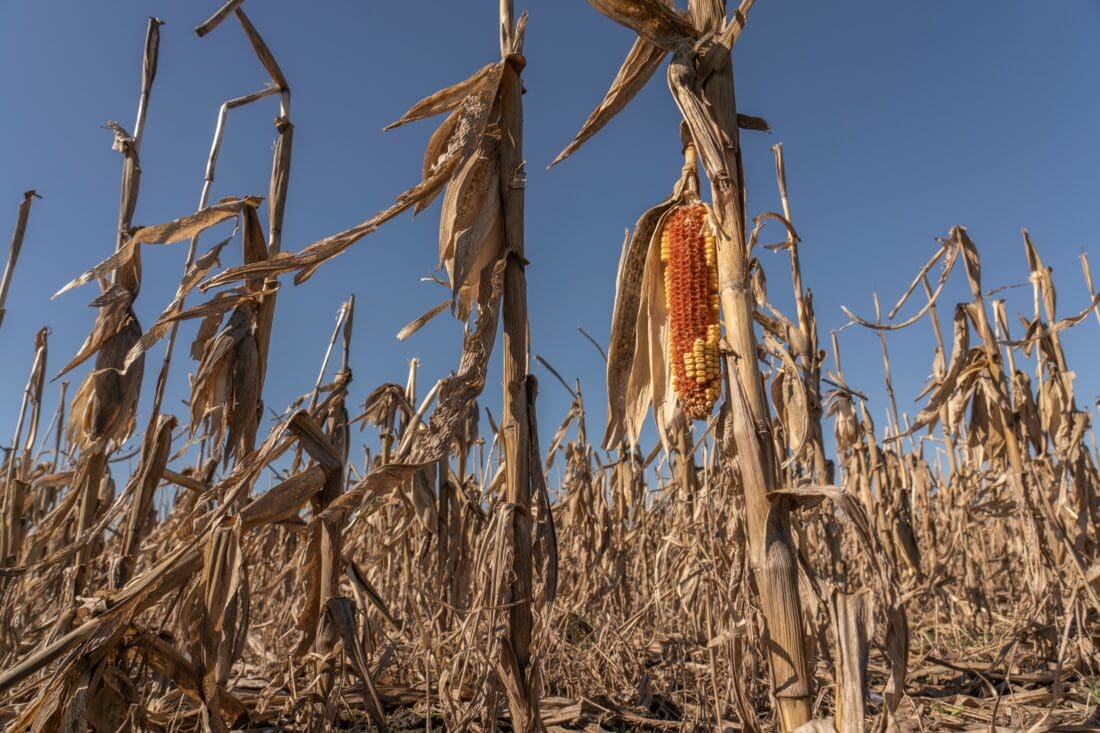
The drought also had an impact on global trade, as other countries like Brazil and Argentina took advantage of the U.S. supply shortfall by increasing exports to try and fill product needs globally.
For the financial markets, the drought generally led to increased commodity speculation and increased commodity-related ETFs, with investors seeking to capitalize on the weather-driven volatility.
Global Food Crisis (2007-2008)
Further back in history, the Global Food Crisis of 2007–2008is another prime example of how agricultural commodities can trigger a chain reaction in economies.
This dire situation was borne out of a combination of bad weather, higher oil prices, and increased biofuel demand – all of which sent agricultural commodity prices soaring.
Prices of basic food staples like rice, wheat, and corn, for example, shot higher, creating food shortages in many developing nations. This, in turn, spurred social unrest in countries like Egypt, Haiti, and Bangladesh, where food became unaffordable for millions of people. The spike in agricultural commodity prices also impacted global financial markets, especially in the energy sector, as biofuels became more prominent in the energy mix.
These are just a few examples. In fact, there are numerous scenarios that can illustrate how agricultural commodities are intricately tied to global financial markets, economies, and international trade.
You can also learn more from information across our Campus – for example, by listening to IBKR Podcasts – where we house a treasure trove of current and historical discussions about agricultural commodities with industry experts. There, you can also learn more about specific agricultural commodity futures contracts, risks faced by market participants, as well as food manufacturers, and other events that can weigh on supply-demand dynamics, which can help you further your understanding of agricultural commodities trading and investing.
Learn More
In the News:
USDA Closes Mexican Border to Protect U.S. Livestock from New World Screwworm
IBKR Podcasts
When Trade Wars Hit the Farm… Who Gets Plowed Under?
Lean Hog Futures – Is Anyone Bringing Home the Bacon?
Live Cattle Futures – Herd Around the World
Sugar Futures – Talk About a Cereal Killer
Eyepopping Corn Prices – Fueling Food Inflation
The War on Wheat – How Much Bread Is on The Table?
Traders’ Academy
Introduction to Grains and Oilseeds
Understanding South American Soybean Futures
Hedging with Grain and Oilseed Futures and Options
Traders’ Insight
Corn Sustainability in the United States
Navigating the U.S. Planting Season with Enhanced Risk Management
A Brewing Storm for Arabica Coffee
How Commodity Prices Impact Inflation
Economics
U.S. Bureau of Labor Statistics (BLS) / Federal Reserve Bank of St. Louis (FRED)
Producer Price Index (PPI): Food Manufacturing
Consumer Price Index (CPI): Food in U.S. Average City
Reports & Data
U.S. Department of Agriculture (USDA)
Livestock and Poultry: World Markets and Trade
World Agricultural Outlook Board (WAOB)
National Agricultural Statistics Service (NASS)
Commodity Futures Trading Commission (CFTC)
Commitments of Traders Report (COT)
National Oceanic and Atmospheric Administration (NOAA)
U.S. Drought Monitor
Global Reports
Food and Agriculture Organization (FAO) of the United Nations
World Food Situation / FAO Food Price Index
Europe
European Centre for Medium-Range Weather Forecasts (ECMWF)
European Commission
South America
National Supply Company (CONAB) – Brazil
Agricultural Information Portal
Ministry of Economy – Argentina
Australia
Australian Bureau of Agricultural and Resource Economics and Sciences (ABARES)
Agricultural Commodities & Trade Data
India
Ministry of Agriculture & Farmers Welfare
Product Codes & Exchanges
Explore CME Market Pulse for in-depth details on agricultural futures contracts, including corn, soybeans, Chicago wheat, live cattle, and more! This tool offers timely, AI-powered insights into futures markets, providing updates daily, including settlement prices, daily changes, highs and lows, and year-over-year comparisons – helping traders to make more informed decisions by highlighting significant market movements and trends.
Join The Conversation
If you have a general question, it may already be covered in our FAQs page. go to: IBKR Ireland FAQs or IBKR U.K. FAQs. If you have an account-specific question or concern, please reach out to Client Services: IBKR Ireland or IBKR U.K..
Visit IBKR U.K. Open an IBKR U.K. Account