






Already an Interactive Brokers Client?
Agricultural commodities come with unique challenges that can impact prices, as well as potential returns, and whether you’re trading corn futures or investing in a soybean-related exchange-traded fund (ETF), identifying and understanding some of the major risks to your investment can be critical.
In fact, risks from weather, geopolitics, supply chains, leverage, and even market psychology, can be crucial to the outcome of your trading strategy.

Price Volatility
Agricultural commodities’ prices can be extremely volatile, as they’re often affected by factors such as severe weather events like droughts, floods, hurricanes, tornadoes, or frost that can wipe out entire crops or create sudden shortages.
Other common supply chain disruptors that consequently contribute to price volatility are pest infestations and plant diseases. Even seasonal changes or early/late harvests can influence prices. In fact, all of these factors can cause sudden price swings that can catch traders off guard.
Example:
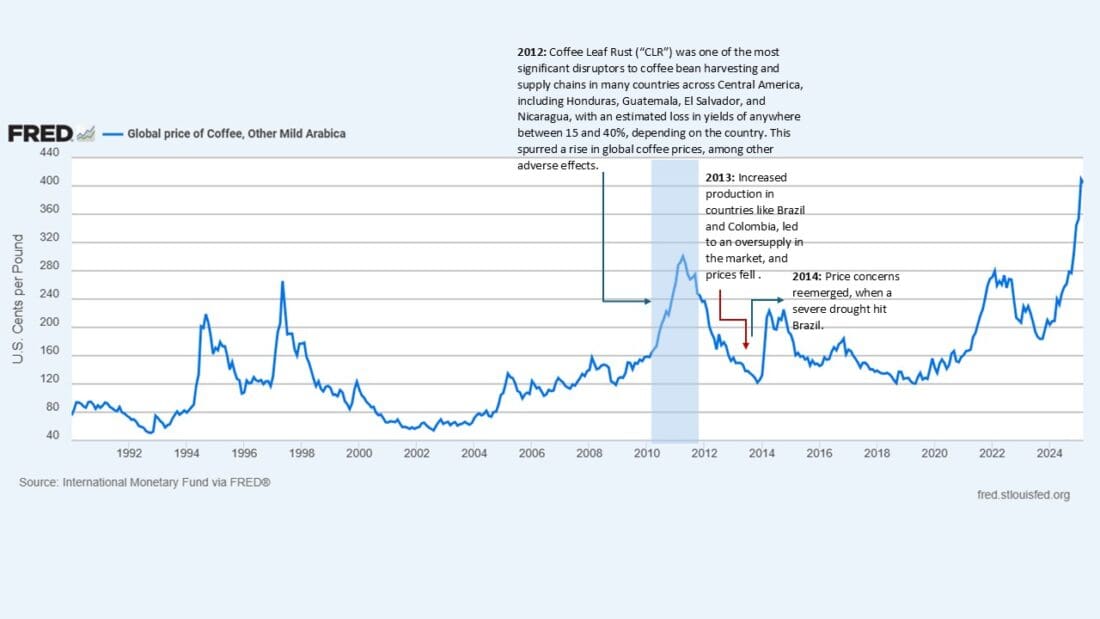
Between the years 2012 and 2014, coffee prices underwent significant bouts of volatility amid a series of weather events and disease outbreaks.
During this time, the fungus-borne disease Coffee Leaf Rust (or “CLR”) was one of the most significant disruptors to coffee bean harvesting and supply chains in many countries across Central America, including Honduras, Guatemala, El Salvador, and Nicaragua, with an estimated loss in yields of anywhere between 15 and 40%, depending on the country. This spurred a rise in global coffee prices, among other adverse effects.

However, around 2013, increased production in countries like Brazil and Colombia, led to an oversupply in the market, and prices fell – only to regain ground, as concerns reemerged in 2014, when a severe drought hit Brazil.
Supply Chains
Any point along supply chains can face significant risks, as commodities must be harvested, stored, transported, and delivered. If a port shuts down, for example, or storage infrastructure is damaged—commodity flow can be interrupted. This kind of event also affects pricing and can make contracts harder or more expensive to settle.
Geopolitics & Macroeconomics
Market participants are also exposed to geopolitical and macroeconomic risks, including trade policies such as tariffs, export bans, or sanctions—any of which can alter global supply and demand overnight.
Currency Risk
There is also currency risk, where fluctuations can affect the price competitiveness of U.S. commodities overseas (global agricultural commodities are priced in U.S. dollars) – as well as interest rate changes, and broader inflationary trends, which can also influence commodities markets, often through shifts in investor behavior and capital flows.
Global Conflict, Political Instability, Government Policy
Overall, global conflict or political instability in a key producing or importing country can send shockwaves through the market.
Example
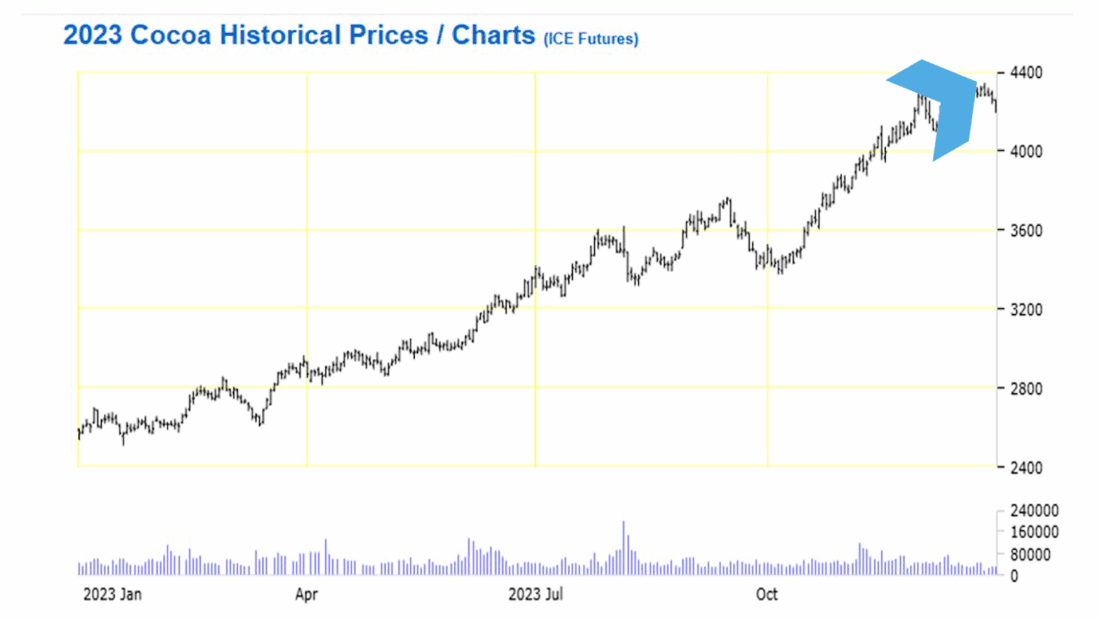
Around February 2023, the Ivory Coast government became more actively involved in the cocoa markets by restricting several major traders from buying the commodity – this with an aim to ensure its availability to the country’s local firms.
As the Ivory Coast is responsible for the world’s largest concentration of cocoa, the actions taken by its government generally ignited concerns about potential shortages, as certain major international firms like Cargill were essentially shut out from purchasing any of its supply.
Leverage
It’s important to note that if you’re trading futures, you’re also dealing with leverage—which can amplify both gains and losses. A small move in the wrong direction could result in a margin call, forcing you to deposit more funds or liquidate your position. In fast-moving markets, this can happen very quickly, especially if you’re overleveraged or not using risk management tools like stop-loss orders. This is why understanding your risk toleranceand capital at stake is important.
Market Sentiment / Speculation
Risks may arise out of the prevailing market sentiment, which may be driven by news headlines, social media, or institutional positioning— any of which can lead to irrational price movements.
For example, a rumor of a poor Brazilian coffee crop can spike prices even if the facts aren’t confirmed. Or speculators piling into wheat or soybeans can cause temporary price bubbles that don’t reflect fundamentals. All of this can create risk for anyone holding positions during periods of high speculation or hype.
Open Interest
One way to interpret market signals is through open interest, which represents the total number of outstanding futures contracts –or the number of active positions in the market – both long and short. We touched on open interest in our previous lesson about futures contracts, where traders and investors may look to these tables to gauge liquidity, and, when coupled with price movements, may glean indications of bullish or bearish market trends.
For instance, rising prices, when coupled with rising open interest, may mean that new money is flowing into the market, while falling prices and rising open interest may mean new short positions are being added. If open interest is falling, it could mean the trend is losing momentum, as traders are closing positions.
Indeed, open interest is typically used alongside price and volume when conducting technical analysis or making hedging decisions – especially in commodities and financial futures.
If, for example, corn futures are rising and open interest is increasing, this may suggest new buyers are entering the market — signaling a healthy uptrend. But if prices rise and open interest drops, that could indicate short covering rather than real buying pressure.
Learn More
In the News:
USDA Closes Mexican Border to Protect U.S. Livestock from New World Screwworm
Product Codes & Exchanges
IBKR Podcasts
When Trade Wars Hit the Farm… Who Gets Plowed Under?
Lean Hog Futures – Is Anyone Bringing Home the Bacon?
Live Cattle Futures – Herd Around the World
Sugar Futures – Talk About a Cereal Killer
Eyepopping Corn Prices – Fueling Food Inflation
The War on Wheat – How Much Bread Is on The Table?
Traders’ Academy
Introduction to Grains and Oilseeds
Understanding South American Soybean Futures
Hedging with Grain and Oilseed Futures and Options
Introduction to TWS Order Types
Introduction to Technical Analysis
Intermediate Technical Analysis
Traders’ Insight
Corn Sustainability in the United States
Navigating the U.S. Planting Season with Enhanced Risk Management
A Brewing Storm for Arabica Coffee
How Commodity Prices Impact Inflation
Explore CME Market Pulse for in-depth details on agricultural futures contracts, including corn, soybeans, Chicago wheat, live cattle, and more! This tool offers timely, AI-powered insights into futures markets, providing updates daily, including settlement prices, daily changes, highs and lows, and year-over-year comparisons – helping traders to make more informed decisions by highlighting significant market movements and trends.
Join The Conversation
If you have a general question, it may already be covered in our FAQs page. go to: IBKR Ireland FAQs or IBKR U.K. FAQs. If you have an account-specific question or concern, please reach out to Client Services: IBKR Ireland or IBKR U.K..
Visit IBKR U.K. Open an IBKR U.K. Account