









Investor sentiment is strengthening further to begin this new week following a remarkable Wall Street comeback on Friday. The Dow Jones Industrial Average hit a fresh record for the second session in a row this morning, as money managers continue to pile into cyclically oriented names and industries that are positioned to deliver outsized gains in an environment of reaccelerating activity alongside a few rate cuts. Animal spirits were additionally propelled by Japanese Prime Minister Sanae Takaichi achieving a landslide victory in a snap election, granting her political party a significant majority in the nation’s parliament. The triumph essentially enables the country’s first female leader, who was strongly endorsed by President Trump’s White House, to pursue whatever policy she wants, which include heavier spending and taxation relief, measures that serve to bolster economic conditions and corporate earnings in the short-run while carrying the potential risk of raising term premiums and lifting long-end sovereign borrowing costs as a result throughout the globe. The four major US stock benchmarks are appreciating as a result amidst all sectors advancing minus the defensive consumer staples, utilities and healthcare categories. Commodities are surging across the board, too, with the exception of natural gas, helped by a weaker greenback. Volatility protection instruments are seeing softening prices in consideration of offensive winds. Elsewhere, yields are near their flatlines.
Econ Data, Auctions on Deck
Two separate government shutdowns have altered the statistics calendar and essentially packed this week with high-impact economic data including retail sales, nonfarm payrolls accompanied by annual benchmark revisions and the Consumer Price Index (CPI). However, other reports to watch are small business optimism, the Employment Cost Index, import/export charges, unemployment claims and existing home transactions. Additionally, we have three distinct Treasury auctions of 3- and 10-year notes and 30-year bonds amounting to a total of $128 billion across the frontloaded offerings scheduled from Tuesday through Thursday. Overall, top of mind for investors will be where the labor market stands in light of weakening hiring, and its implications for an extension of the cycle and the widening or narrowing path for rate cuts. Also, personal spending numbers will be important as a gauge of the momentum of household shoppers, although inflation figures will be of increased significance because a downside beat at 2.4% could potentially add one more Fed reduction to 2026’s curve if paired with weaker-than-anticipated job results. Finally, participants will be analyzing the appetite for sovereign debt instruments in an environment of fiscal dominance in which central banks want to be cautious but politicians want activity to run hot.
International Roundup
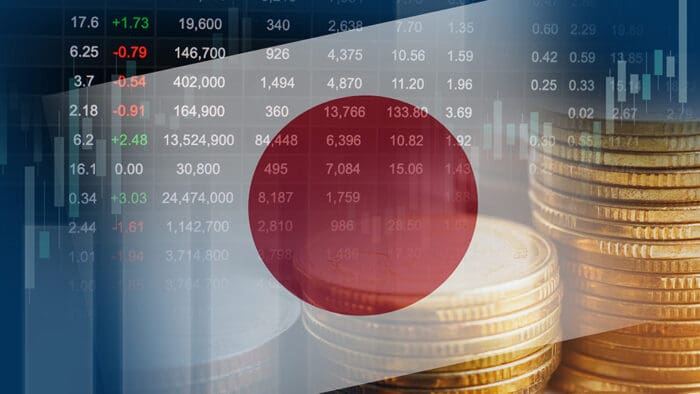
Japan Snap Election Pushes Nikkei 225 to Record High
Prime Minister Sanae Takaichi’s Liberal Democrats secured a dominating majority in yesterday’s snap election, further cementing her plans to launch tax and spending stimulus. The party captured 75% of the seats in the country’s lower house, the largest majority held by a political party since WWII, with workers frustrated by real wages declining during every month last year. The election result intensified the Takaichi Trade—the Nikkei 225 Index jumped more than 4% to a record high in response to anticipations that fiscal spending will provide growth opportunities for businesses, but yields climbed in response to fears that her policies could fuel inflation.
Japan Real Wages Drop for 12th Consecutive Month
The Ministry of Economy, Trade & Income reported that real wages in Japan declined for the 12th consecutive month in December. While nominal wages were up 2.4% year over year (y/y), inflation caused real compensation to sink 0.1%. Economists anticipated nominal income would advance 3% after ascending 1.7% in November.
As Economy Watchers’ Pessimism Deepens
Japan’s Economy Watchers Survey, which analyzes sentiment among businesses such as livery services and restaurants, sank slightly deeper into pessimism, slipping from 0.1 point to 47.6 last month. Readings below 50 indicate negative sentiment. January’s score was the lowest since last October’s 47.1 print.
Australian Retail Spending Falls
After a strong November for holiday spending, household outlays descended 0.4% month over month (m/m) in December but were still up 5% y/y, according to the Australian Bureau of Statistics. A consensus of economists pointed to shoppers dishing out 0.2% more m/m after November’s 1% gain. Relative to last year, December’s expansion decelerated from 6% in the preceding month.
The m/m weakness occurred in six out of nine broad categories. Disappointing results and the extent of the declines surfaced in the following groups:
- Clothing and footwear, 2.4%
- Furnishings and household equipment, 1.7%
- Health, 1.3%
- Miscellaneous goods and services, 0.9%
- Recreation and culture,
- Food, 0.4%
The alcoholic beverage and tobacco category bucked the trend with outlays increasing 2%. Transport and the hotels, cafes and restaurants group also strengthened with sales climbing 0.6% and 0.5%, respectively.
Going forward, consumers face the headwind of higher short-term financing costs after the Reserve Bank of Australia increased its benchmark interest rate on Tuesday by 25 bps to 3.85%. Headline inflation, which has been running above 3.5% in recent months, is expected to hit 4.2% by June.
It’s a Whopper!
Behavioral finance firm Sentix says its economic index for Europe produced a “whopping increase of six points” this month, providing a “silver lining” for the region. The gauge climbed for the third consecutive month with its recent six-point gain pushing it to a positive 4.2, its highest level since July’s 4.5 result.
Disclosure: Interactive Brokers Affiliate
Information posted on IBKR Campus that is provided by third-parties does NOT constitute a recommendation that you should contract for the services of that third party. Third-party participants who contribute to IBKR Campus are independent of Interactive Brokers and Interactive Brokers does not make any representations or warranties concerning the services offered, their past or future performance, or the accuracy of the information provided by the third party. Past performance is no guarantee of future results.
This material is from IBKR Macroeconomics, an affiliate of Interactive Brokers LLC, and is being posted with its permission. The views expressed in this material are solely those of the author and/or IBKR Macroeconomics and Interactive Brokers is not endorsing or recommending any investment or trading discussed in the material. This material is not and should not be construed as an offer to buy or sell any security. It should not be construed as research or investment advice or a recommendation to buy, sell or hold any security or commodity. This material does not and is not intended to take into account the particular financial conditions, investment objectives or requirements of individual customers. Before acting on this material, you should consider whether it is suitable for your particular circumstances and, as necessary, seek professional advice.
Disclosure: Bonds
As with all investments, your capital is at risk.





Join The Conversation
If you have a general question, it may already be covered in our FAQs page. go to: IBKR Ireland FAQs or IBKR U.K. FAQs. If you have an account-specific question or concern, please reach out to Client Services: IBKR Ireland or IBKR U.K..
Visit IBKR U.K. Open an IBKR U.K. Account