











I’m sure you’ve noticed, but families are paying record or near-record amounts just to keep cool this summer.
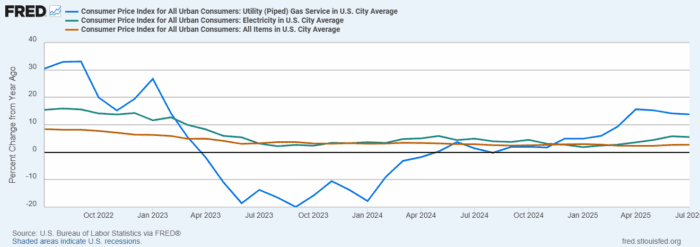
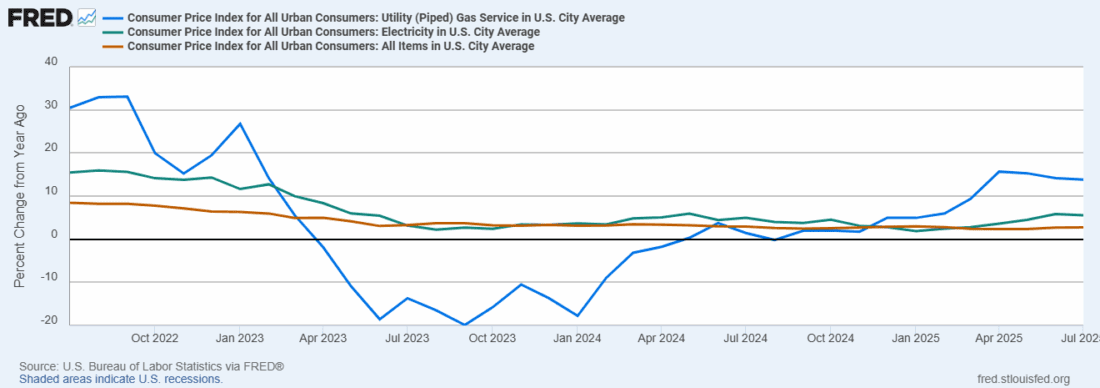
According to the Bureau of Labor Statistics, electricity costs have climbed 5.5% in the past 12 months, while natural gas prices have jumped nearly 14%. The National Energy Assistance Directors Association (NEADA) says the average household will spend nearly $800 on summer cooling alone, the highest level in more than a decade.
Past performance does not guarantee future results.
When costs rise this quickly, people naturally look for someone—or something—to blame. President Donald Trump, never one to mince words, took to Truth Social to point the finger at “STUPID AND UGLY WINDMILLS,” which he claims are driving up energy prices in New Jersey and across the country. Many of you may have seen his posts.
There’s some truth in what the President is saying. Energy is political, and the rush to “green” policies has often been ham-handed and expensive.
But in this case, the facts tell a more complicated story. The truth is that offshore wind projects off the Jersey Shore never even got built. Today, renewables make up only about 8% of New Jersey’s electricity, and wind contributes less than 1%.
That means the culprit behind higher electricity bills isn’t wind turbines. Instead, it’s a surge in demand exacerbated by an aging grid, higher natural gas costs and the billions of dollars utilities are investing to modernize their infrastructure.
America’s Electricity Demand Is Rising at the Fastest Pace in Decades
For nearly two decades, U.S. electricity demand was flat. Between 2005 and 2020, consumption barely budged, thanks to efficiency gains in appliances and slower economic growth. Utilities planned for more of the same.
But the past three years have challenged those assumptions. Nationwide demand is now growing 2% to 3% annually, according to the Energy Information Administration (EIA). In Texas and the Mid-Atlantic, where data centers and manufacturing plants are sprouting like weeds, demand is rising 10% or more per year. This July, America broke its electricity demand record twice in two days, hitting nearly 760 gigawatts at peak—enough to power every home in Texas 60 times over.
Utilities Are Investing Record Sums to Strengthen the Grid
The AI boom is a major driver. Data centers consumed around 180 terawatt-hours of power last year, and that number could double before the decade is out. Add in the electrification of vehicles, reshoring of factories and hotter summers, and demand is rising faster than utilities can keep up.
The Edison Electric Institute (EEI), which represents America’s investor-owned utilities, reports that the industry poured a record $178 billion into the grid last year. That’s the 13th straight year of record spending. Over the next five years, capital expenditure is projected to exceed $1.1 trillion.

Past performance does not guarantee future results.
Global Renewable Generation Has Surged Past 40%
Even as Trump rails against wind and solar, the economics have never looked stronger. Lazard’s latest Levelized Cost of Energy (LCOE) study shows that, without subsidies, renewables remain the cheapest source of new electricity generation. Utility-scale solar in the U.S. can now deliver electricity at about $0.04 per kilowatt-hour—less than half the cost of new coal or gas peaker plants.

Past performance does not guarantee future results.
Globally, renewables already make up over 40% of generation, with solar the fastest-growing source of electricity for the 20th year in a row. In the U.S., developers plan to add 64 gigawatts of new capacity this year alone—more than half of it solar, with the balance in batteries, wind and natural gas. That’s the largest annual buildout since 2002, when gas was king.
Private equity firms see the writing on the wall. BloombergNEF reports that most of their new energy investments are in renewables, not fossil fuels. Ten years ago, solar power was four times more expensive than fossil fuel. Today, it’s more than 50% cheaper.
Renewables Are Cushioning Consumers from Volatile Gas Prices
This doesn’t mean renewables are flawless. They require transmission buildout, storage and backup. But the claim that “windmills are causing high prices” just doesn’t hold up to the numbers. If anything, renewables are helping cushion the blow from volatile gas markets.
None of this is much comfort when you’re opening a $500 electric bill. But it’s worth taking the long view. Today, the biggest line item in the American household “energy wallet” isn’t electricity; it’s actually gasoline, which costs families nearly $3,000 per year on average, according to a report by the Electric Power Research Institute (EPRI). But as vehicles go electric, those dollars will shift from gas pumps to utility bills.
The EPRI additionally projects that by 2050, household energy spending could fall by more than a third in real terms because we’ll spend less on gasoline and heating oil.
Ignore the Politics, Follow the Money
So, what’s the takeaway for investors?
Utilities have historically been seen as “boring” dividend payers, but today, I see them becoming beneficiaries of the same AI and industrial growth trends that have propelled chipmakers and robotics firms. Last year, a staggering 94% of utilities raised or reinstated their dividends, with payout ratios higher than any other U.S. sector, according to the EEI.
I say ignore the politics and follow the money. Solar and wind are not only cheaper—they’re where developers, private equity and global capital appear to be placing their bets.
With demand surging, utilities are modernizing. Renewables are the cheapest way forward.
—
Originally Posted August 25, 2025 – AI Data Centers Push Power Demand to the Fastest Growth in Decades
All opinions expressed and data provided are subject to change without notice. Some of these opinions may not be appropriate to every investor. By clicking the links above, you will be directed to a third-party website. U.S. Global Investors does not endorse all information supplied by these websites and is not responsible for their content.
Disclosure: US Global Investors
All opinions expressed and data provided are subject to change without notice. Holdings may change daily.
Some of these opinions may not be appropriate to every investor. By clicking the link(s) above, you will be directed to a third-party website(s). U.S. Global Investors does not endorse all information supplied by this/these website(s) and is not responsible for its/their content.
About U.S. Global Investors, Inc. – U.S. Global Investors, Inc. is an investment adviser registered with the Securities and Exchange Commission (“SEC”). This does not mean that we are sponsored, recommended, or approved by the SEC, or that our abilities or qualifications in any respect have been passed upon by the SEC or any officer of the SEC.
This commentary should not be considered a solicitation or offering of any investment product.
Certain materials in this commentary may contain dated information. The information provided was current at the time of publication.
Some links above may be directed to third-party websites. U.S. Global Investors does not endorse all information supplied by these websites and is not responsible for their content.
Please consider carefully a fund’s investment objectives, risks, charges and expenses. For this and other important information, obtain a fund prospectus by clicking here or by calling 1-800-US-FUNDS (1-800-873-8637). Read it carefully before investing. Foreside Fund Services, LLC, Distributor. U.S. Global Investors is the investment adviser.
Disclosure: Interactive Brokers Third Party
Information posted on IBKR Campus that is provided by third-parties does NOT constitute a recommendation that you should contract for the services of that third party. Third-party participants who contribute to IBKR Campus are independent of Interactive Brokers and Interactive Brokers does not make any representations or warranties concerning the services offered, their past or future performance, or the accuracy of the information provided by the third party. Past performance is no guarantee of future results.
This material is from US Global Investors and is being posted with its permission. The views expressed in this material are solely those of the author and/or US Global Investors and Interactive Brokers is not endorsing or recommending any investment or trading discussed in the material. This material is not and should not be construed as an offer to buy or sell any security. It should not be construed as research or investment advice or a recommendation to buy, sell or hold any security or commodity. This material does not and is not intended to take into account the particular financial conditions, investment objectives or requirements of individual customers. Before acting on this material, you should consider whether it is suitable for your particular circumstances and, as necessary, seek professional advice.



Join The Conversation
If you have a general question, it may already be covered in our FAQs page. go to: IBKR Ireland FAQs or IBKR U.K. FAQs. If you have an account-specific question or concern, please reach out to Client Services: IBKR Ireland or IBKR U.K..
Visit IBKR U.K. Open an IBKR U.K. Account