









Originally Posted September 25, 2025 – Government shutdown: What could investors expect from the market?
Key takeaways
Sept. 30 deadline
If Congress doesn’t pass a spending bill or continuing resolution by Sept. 30 at midnight, parts of the government will start to shut down.
Limited market impact?
Many past shutdowns (but not all) led to market volatility, which tended to resolve quickly with limited to no impact.
Think long-term
Don’t let any short-term market volatility from a government shutdown change your long-term investing plan.
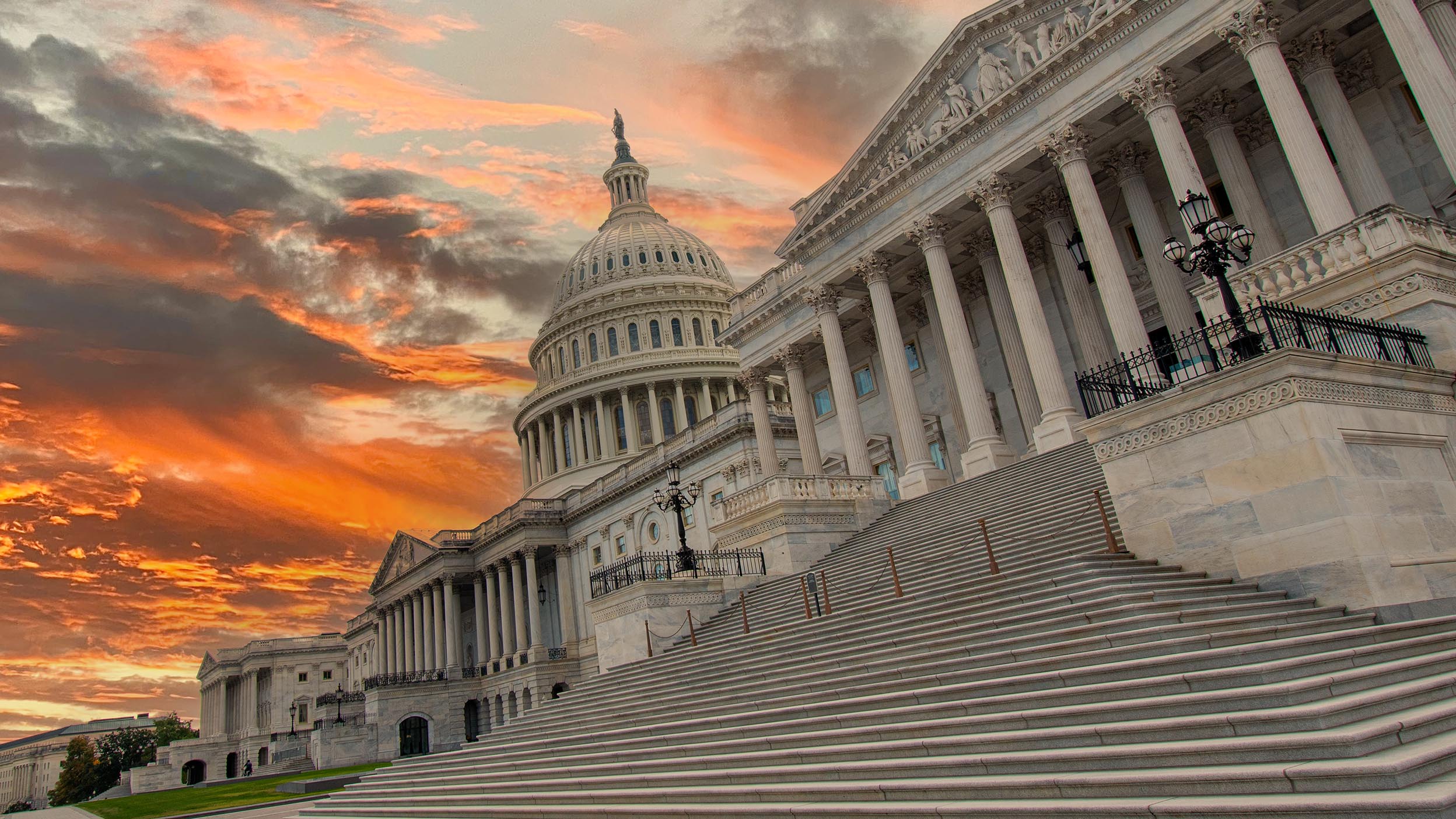
The US government’s fifth shutdown of the century is drawing near. If Congress doesn’t pass legislation to fund the government by Sept. 30, 2025, large parts of the federal government will stop operating. What is a government shutdown, and is one imminent? How could a government shutdown affect the stock market? Should investors be concerned?
Shutdowns limit government operations
During a shutdown, essential government functions would continue to operate. This includes, but isn’t limited to, air-traffic control, border patrol, federal prisons, power grid, mail delivery, disaster relief, food-safety inspections, military, and tax collection. Seniors will continue to receive Social Security and Medicare. Veteran benefits, unemployment benefits, and food stamps will still be administered.
Non-essential government activities would cease though. Examples abound, but here are just a few. The Justice Department would suspend civil cases. NASA would pause most projects but continue to support to the International Space Station. National Zoos and Parks would close, though zoo animals will be fed.
A shutdown is no laughing matter for the estimated 3 million federal employees. Non-essential workers would be furloughed. Essential workers will be paid retroactively when Congress funds the government again. In 2019, roughly 800,000 non-essential workers were furloughed, and 1.3 million essential workers received IOUs.
Government shutdowns tend to resolve quickly
Government shutdowns have precedent. Should it happen, this would be the 22nd since modern Congressional budgeting began in 1976. The longest — 34 days — lasted from December 2018 to January 2019, during the first Trump administration.1 Most were resolved much more quickly, with an average length of eight days. Five only lasted a day.
Shutdowns typically end when one or both political parties can no longer withstand the public’s ire. During the 2013 government shutdown, Congress’s approval rating fell to a record-low 9%.2 For context, at the time, that was below approval ratings for head lice, root canals, traffic jams, and even colonoscopies. Currently, 26% of Americans approve Congress, down from a multi-year high of 36% in March 2021.3
Government shutdowns have had minimal impact on the stock market
The good news is that government shutdowns haven’t really affected the stock market historically. While there have been examples of heightened market volatility, it’s generally been benign. The S&P 500 Index posted positive returns during 12 of the 21 government shutdowns. The average S&P 500 return during shutdowns has been 0.1%.4 (Remember, shutdowns have been resolved, on average, within eight days.)

In the 12 months following the December 2018 government shutdown — the most recent — the S&P 500 Index gained 26.2%. It returned 19.72% in the year following the infamous shutdown of 2013. In fact, since 1980, the average S&P 500 return in the 12 months following the government closing is 16.95%.5
Extending the timeline even further, a $100,000 investment in the S&P 500 Index in 1957 would’ve been worth $12.6 million by the end of 2024.6 That’s despite 21 government shutdowns.
Investors should consider sticking to long-term investing plans
While unnerving, concerns about shutdowns shouldn’t change investors’ long-term investment plans; sticking to the plan may be the best way forward. This wouldn’t be the first government shutdown, and it likely won’t be the last. Ultimately, we expect the spending bill (or bills) to pass without incident and a shutdown to be averted or short-lasting.
In the meantime, the deadline is approaching, and the political gamesmanship is ramping up. Past shutdowns have generally been short with little noticeable impact for most people. Let’s hope history repeats itself.
- 1 Source: US Treasury, 8/31/23
- 2 Source: Gallup, 2/26/25. The Congressional Approval Rating fell to 5% in the Associated Press poll. It never got below 9% in the Gallup poll.
- 3 Source: Gallup, 9/16/25
- 4 Source: Bloomberg, L.P. 12/31/22. An investment cannot be made into an index. Past performance does not guarantee future results.
- 5 Source: Bloomberg L.P., 2/26/25, based on the returns of the S&P 500 Index. An investment cannot be made into an index. Past performance does not guarantee future results.
- 6 Source: Bloomberg L.P., 12/19/24. The S&P 500 Index is a market-capitalization-weighted index of the 500 largest domestic US stocks. Performance based on price returns. An investment cannot be made into an index. Past performance does not guarantee future results.
Disclosure: Invesco US
This does not constitute a recommendation of any investment strategy or product for a particular investor. Investors should consult a financial advisor/financial consultant before making any investment decisions. Invesco does not provide tax advice. The tax information contained herein is general and is not exhaustive by nature. Federal and state tax laws are complex and constantly changing. Investors should always consult their own legal or tax professional for information concerning their individual situation. The opinions expressed are those of the authors, are based on current market conditions and are subject to change without notice. These opinions may differ from those of other Invesco investment professionals.
NOT FDIC INSURED
MAY LOSE VALUE
NO BANK GUARANTEE
All data provided by Invesco unless otherwise noted.
Invesco Distributors, Inc. is the US distributor for Invesco Ltd.’s Retail Products and Collective Trust Funds. Institutional Separate Accounts and Separately Managed Accounts are offered by affiliated investment advisers, which provide investment advisory services and do not sell securities. These firms, like Invesco Distributors, Inc., are indirect, wholly owned subsidiaries of Invesco Ltd.
©2024 Invesco Ltd. All rights reserved.
Disclosure: Interactive Brokers Third Party
Information posted on IBKR Campus that is provided by third-parties does NOT constitute a recommendation that you should contract for the services of that third party. Third-party participants who contribute to IBKR Campus are independent of Interactive Brokers and Interactive Brokers does not make any representations or warranties concerning the services offered, their past or future performance, or the accuracy of the information provided by the third party. Past performance is no guarantee of future results.
This material is from Invesco US and is being posted with its permission. The views expressed in this material are solely those of the author and/or Invesco US and Interactive Brokers is not endorsing or recommending any investment or trading discussed in the material. This material is not and should not be construed as an offer to buy or sell any security. It should not be construed as research or investment advice or a recommendation to buy, sell or hold any security or commodity. This material does not and is not intended to take into account the particular financial conditions, investment objectives or requirements of individual customers. Before acting on this material, you should consider whether it is suitable for your particular circumstances and, as necessary, seek professional advice.






Join The Conversation
If you have a general question, it may already be covered in our FAQs page. go to: IBKR Ireland FAQs or IBKR U.K. FAQs. If you have an account-specific question or concern, please reach out to Client Services: IBKR Ireland or IBKR U.K..
Visit IBKR U.K. Open an IBKR U.K. Account