









Originally Posted September 17 2025 – Fed Delivers Dovish Shift, Restarts Rate-Cutting Cycle
The Federal Reserve cited increasing risks to the U.S. labor market as a reason to ease monetary policy.
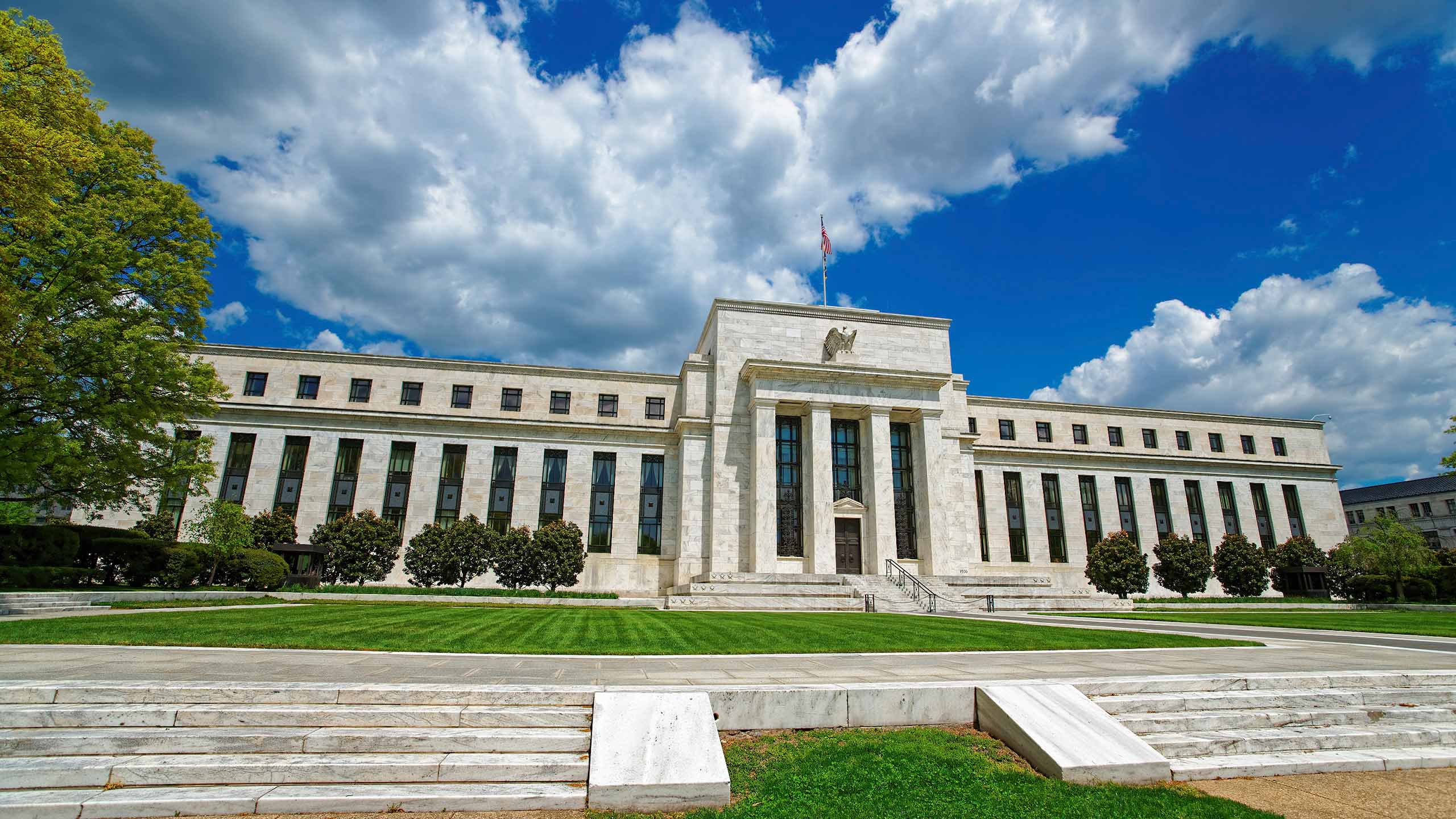
The Federal Reserve resumed its rate-cutting cycle at the September meeting, lowering its policy rate by 25 basis points (bps) to a range of 4%–4.25%, after being on hold since its previous cut in December. The Fed also signaled a less restrictive stance to come amid mounting labor market weakness. We are aligned with market consensus and Fed projections in forecasting two more 25-bp interest rate cuts before year-end.
The tone of the Fed statement – alongside updated projections (the “dot plot”) signaling expectations for a string of interest rate cuts and Chair Jerome Powell’s press conference – indicated that concerns over weakening labor market activity have begun to outweigh concerns over inflation, which remains largely driven by tariffs. At the same time, the labor market deterioration was not deemed substantial enough to warrant accelerated cuts. Powell characterized the 25-bp cut as a “risk management” move, while underscoring that a 50-bp cut wasn’t seriously discussed.
The decision was not unanimous. Newly confirmed Governor Stephen Miran dissented in favor of a larger 50-bp cut, while the dot plot indicated one official preferred to keep rates unchanged at this meeting. Nonetheless, the majority of officials appear to support a gradual path toward neutral monetary policy – which the central bank estimates to be around 3% – over the next few years.
The Fed also maintained its current balance sheet policy of gradually reducing its holdings of U.S. Treasuries and agency mortgage-backed securities. (For our latest views on the Fed’s mortgage holdings, please read PIMCO Perspectives, “A Fed Housing Fix That’s Hiding in Plain Sight.”)
Well-telegraphed move doesn’t rattle markets
The Fed’s decisions were broadly in line with expectations. Market reaction was initially muted, but yields on intermediate-maturity U.S. Treasuries rose and ended the day modestly higher.
Ahead of the meeting, futures markets were already pricing a high probability of two additional 25-bp rate cuts this year. The Fed’s longer-run path toward neutral had already been priced in as well, as investors anticipated that policymakers would respond to deteriorating labor conditions.
Labor market risks drive statement and forecast revisions
The Fed’s statement reflected a shift in emphasis, highlighting that “downside risks to employment have risen,” while saying inflation remained “somewhat elevated.” These labor market concerns not only prompted the rate cut at the September meeting but also led to changes in Fed policy projections. The median projection now anticipates a total of 75 bps of cuts by the end of 2025, implying two additional 25-bp cuts in October and December. The median just narrowly edged down, with nine Fed officials still preferring easing by less than 75 bps this year. The downward rate path revisions also suggest that while the Fed views labor market risks as warranting a faster pace back to neutral, economic conditions haven’t deteriorated enough to warrant moving policy into accommodative territory.
The newly introduced 2028 dots showed Fed officials anticipate policy rates to return to neutral by then, consistent with the long-run rate estimate. Interestingly, the longer-run dots converged toward the median projection of 3%. Officials who had previously projected a long-run rate above the median revised their projections down, while one or two of the lower estimates were adjusted slightly higher.
Chair Powell’s tone was measured
Although yields ticked a few basis points higher throughout the press conference, we thought Powell’s comments were measured. He characterized the rate cut as a “risk management” move, and suggested that a 50-bp cut was not seriously discussed. At the same time, he emphasized the Fed’s commitment to its dual mandate and acknowledged increased downside labor market risks. His discussion of slowing hiring momentum and weaker labor supply and demand growth (which he called “a curious balance”) was a shift in tone relative to the July press conference, when he focused more on supply-side dynamics.
Inflation has remained somewhat elevated, pressured by tariff-related price adjustments – particularly in goods. But Powell emphasized that inflation expectations look stable. He framed the rate cut as “taking a step toward neutral” and noted the Fed has plenty of room to react if labor market activity begins to contract.
Looking ahead: a complex landscape for policymakers
Political pressure on the Fed has been building, particularly after clear signs of weakness appeared in the labor market data. However, the combination of tighter immigration policy, AI-driven labor displacement, and tariff-related supply shocks has created a complex environment for monetary policy. In our view, the Fed’s decision to cut rates reflects its effort to balance the need to support growth and employment with the imperative to maintain inflation credibility.
Looking ahead, the key questions will be whether productivity gains from AI and automation can offset labor supply shocks and reaccelerate economic growth, with fiscal policy in 2026 potentially providing additional support.
For now, the Fed has made its move. It has also signaled it’s ready to do more if labor markets are further strained by this year’s various economic policy pivots on tax, trade, and immigration. (Learn more in our recent Macro Signposts piece, “U.S. Labor Markets: A Release Valve for Tariff Pressure?”) We believe a monetary policy approach of gradually moving interest rates toward neutral is a reasonable risk management strategy in this complex environment.
Disclosure: PIMCO
All investments contain risk and may lose value. This material is intended for informational purposes only. Forecasts, estimates and certain information contained herein are based upon proprietary research and should not be considered as investment advice or a recommendation of any particular security, strategy or investment product. No part of this material may be reproduced in any form, or referred to in any other publication, without express written permission. PIMCO is a trademark of Allianz Asset Management of America L.P. in the United States and throughout the world. THE NEW NEUTRAL is a trademark of Pacific Investment Management Company LLC in the United States and throughout the world. ©2023, PIMCO.
Disclosure: Interactive Brokers Third Party
Information posted on IBKR Campus that is provided by third-parties does NOT constitute a recommendation that you should contract for the services of that third party. Third-party participants who contribute to IBKR Campus are independent of Interactive Brokers and Interactive Brokers does not make any representations or warranties concerning the services offered, their past or future performance, or the accuracy of the information provided by the third party. Past performance is no guarantee of future results.
This material is from PIMCO and is being posted with its permission. The views expressed in this material are solely those of the author and/or PIMCO and Interactive Brokers is not endorsing or recommending any investment or trading discussed in the material. This material is not and should not be construed as an offer to buy or sell any security. It should not be construed as research or investment advice or a recommendation to buy, sell or hold any security or commodity. This material does not and is not intended to take into account the particular financial conditions, investment objectives or requirements of individual customers. Before acting on this material, you should consider whether it is suitable for your particular circumstances and, as necessary, seek professional advice.






Join The Conversation
If you have a general question, it may already be covered in our FAQs page. go to: IBKR Ireland FAQs or IBKR U.K. FAQs. If you have an account-specific question or concern, please reach out to Client Services: IBKR Ireland or IBKR U.K..
Visit IBKR U.K. Open an IBKR U.K. Account