






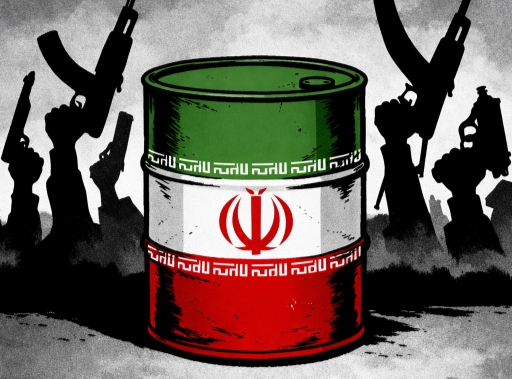



The US-Israeli strikes against Iran over the weekend have triggered a region-wide conflict and sent shockwaves through stock exchanges, currency desks, and energy markets around the world. Oil prices have jumped around 16% in a matter of a few days, and European wholesale natural gas prices nearly doubled.
Markets were already on edge over tariffs, geopolitical tensions, and fears of a bubble brewing in the AI stocks. Now investors have to wrap their heads around all the complexities of a regional war in the Middle East, and how it may impact global trade, inflation, and monetary policy.

The Hormuz Effect
To understand why conflict in the Middle East affects prices at the pump in Birmingham or Boston, you need to know about the Strait of Hormuz. It is a narrow strip of water between Iran and Oman, barely 21 miles wide at its narrowest point, with shipping lines even slimmer at about 2 miles to either direction. It does not look like much on a map. But roughly a fifth of the world’s oil and liquefied natural gas passes through it daily. It is a crucial trading route for other goods and materials too, including urea – a key chemical used in fertilizers.
Think of it as the world’s most important straw. When someone presses a finger on it, the flow of trade comes to a halt. Refineries, factories, airlines, heating systems, and farms all depend on that flow.
Iran is now pressing on the straw, hard. It has effectively closed the strait, warning that any vessels that attempt the journey could be targeted. In the days after the strikes, tanker traffic through the strait fell to nearly zero, according to Kpler shipping data, as vessels delayed or diverted their journeys. Insurance companies have responded by sharply raising premiums for vessels operating in the area, forcing even willing operators to think twice.
And it’s not just the shipping route that is threatened. Iran has responded by firing missiles and drones at Israel, the Gulf states, Turkey, and even a British airbase in Cyprus. Major refineries and gas facilities have been damaged, resulting in delayed deliveries.
The market has all the tell-tale signs of an oil shock. It occurs when energy supply is threatened suddenly enough to jolt the global economy. The most infamous example came in 1973, when an Arab oil embargo sent prices soaring and pushed much of the world into recession. A second shock followed a few years later, contributing to nearly a decade of persistent inflation.
Today’s situation is unlikely to be a repeat of the 1970s. Energy systems are more diversified, and countries hold strategic stockpiles that can absorb short disruptions. This shock has also hit at the time when there’s an existing oil glut, an oversupply of the black stuff.
Still, the pattern is familiar. Refineries are disrupted and tankers are stuck as a critical chokepoint comes under threat. If disruption lasts, those buffers only go so far. Immediately, it may be the natural gas markets that are the most disrupted. QatarEnergy has declared force majeure, meaning it may not be able to fulfill existing contracts after drone attacks. It’s responsible for a whopping 20% of the world’s liquefied natural gas (LNG) supply.
The Great Market Scramble
Markets rarely move in unison during a crisis, and this one is no exception. Energy companies have been among the clearest winners. When oil and gas prices rise, producers’ revenues tend to rise with them. Some defense firms, particularly those tied to aerospace and weapons systems such as Northrop Grumman and BAE Systems, have also seen gains. Conflict, bleakly, tends to benefit companies that supply it.
For most other sectors, the picture is tougher. Bank shares have fallen on fears that higher energy costs will slow economic growth and strain borrowers. Airlines are hit from two directions at once as fuel costs jumped while Middle Eastern airspace and airports, including Dubai, face disruption. Tech stocks, which previously hit sky-high prices due to the AI boom, have sold off as investors cut risk.
The strain has been especially visible in Asia, which consumes most of the Gulf oil. Several regional markets recorded steep declines, with tech-heavy South Korea leading the pack. Benchmark index KOSPI plunged 12% on Wednesday, marking the biggest single-day drop in its 46-year history.
What stands out is how broadly the selling spread. When investors take heavy losses in one area, they often sell other assets they would normally hold. Not because those assets are suddenly flawed, but because they need cash or want to reduce exposure. This “sell what you can” dynamic helps explain why downturns feel disorderly, and why assets seemingly unrelated to oil can fall at the same time.
Money has flowed toward safe havens, though even those are not all behaving as expected.
The US dollar strengthened, helped by America’s role as a major energy producer. Gold rose initially, then dipped as investors sold it to cover losses elsewhere. The Iran shock follows gold’s record-breaking rally last year, which is why it may not attract as much investor interest as usual.
Government bonds in the US and Europe also came under pressure as markets began to price in a renewed inflation risk. Cash, unexciting as it is, emerged as one of the week’s quiet winners, with inflows into money‑market funds as investors waited for clarity.
The Dreaded I‑Word
Inflation. It is the reason this conflict matters to everyone, not just traders.
The chain reaction is simple. Oil and gas prices rise. That makes it more expensive to manufacture goods, transport food, heat buildings, and run airlines. Those costs eventually reach consumers. Prices rise more broadly, and central banks face an uncomfortable choice.
Over the past few years, central banks in the US, UK, and Europe worked to bring pandemic-triggered inflation back under control by raising interest rates. Great progress had been made, and most central banks in wealthy countries were on a rate-cutting path. More cuts were widely expected this year, something investors and mortgage holders had begun to count on.
That outlook has darkened. In the UK, a Bank of England rate cut that looked likely only weeks ago is now far from certain. In the US, markets have pushed back expectations for Federal Reserve cuts. A prolonged energy shock would not just delay easing. It could eventually force rates higher again. That would mean more expensive mortgages, costlier business loans, and slower economic growth.
US President Donald Trump has suggested the strikes could last several weeks, while also warning that conflicts can drag on indefinitely. Previous examples from the Middle East and Ukraine highlight that uncertainty carries its own economic cost.
Markets struggle with not knowing. Businesses hesitate when energy costs are unpredictable. Consumers pull back when anxiety rises. Often, the greatest economic damage does not come from the initial shock, but from the ripple effects that follow.
Whether this becomes a brief spike or a prolonged squeeze will shape the economic story of the year ahead. For anyone with a mortgage, a pension, a brokerage account, or even just a weekly grocery bill, it is worth paying attention.
To learn more about how shocks in commodity markets can shape the global economy, download IBKR InvestMentor for free, interactive lessons and daily explainers.


Learn more about InvestMentor
Disclosure: Interactive Brokers Affiliate
Information posted on IBKR Campus that is provided by third-parties does NOT constitute a recommendation that you should contract for the services of that third party. Third-party participants who contribute to IBKR Campus are independent of Interactive Brokers and Interactive Brokers does not make any representations or warranties concerning the services offered, their past or future performance, or the accuracy of the information provided by the third party. Past performance is no guarantee of future results.
This material is from IBKR InvestMentor, an affiliate of Interactive Brokers LLC, and is being posted with its permission. The views expressed in this material are solely those of the author and/or IBKR InvestMentor and Interactive Brokers is not endorsing or recommending any investment or trading discussed in the material. This material is not and should not be construed as an offer to buy or sell any security. It should not be construed as research or investment advice or a recommendation to buy, sell or hold any security or commodity. This material does not and is not intended to take into account the particular financial conditions, investment objectives or requirements of individual customers. Before acting on this material, you should consider whether it is suitable for your particular circumstances and, as necessary, seek professional advice.






Join The Conversation
If you have a general question, it may already be covered in our FAQs page. go to: IBKR Ireland FAQs or IBKR U.K. FAQs. If you have an account-specific question or concern, please reach out to Client Services: IBKR Ireland or IBKR U.K..
Visit IBKR U.K. Open an IBKR U.K. Account