








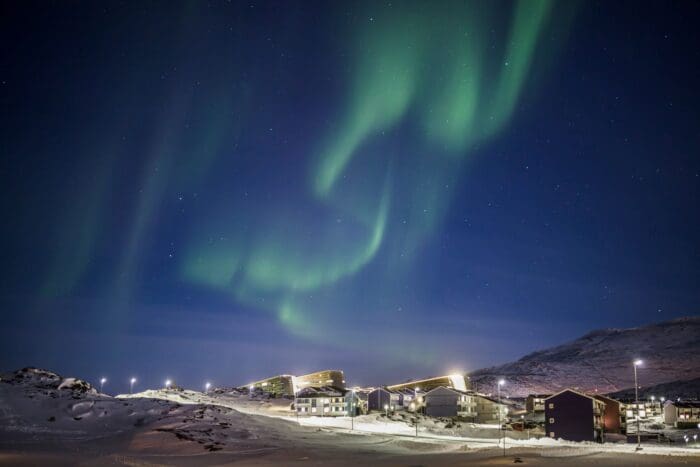


Every few years, Greenland drifts back into the global conversation, usually when a US administration rediscovers its strategic charm. The island sits between North America and Europe, hosts a key American military base, and plays an important role in the US ballistic missile defense system. But geography is only half the story.
Beneath the ice lies a cocktail of critical minerals: rare earth elements, zirconium, lithium, nickel, and much more. These are the ingredients that power everything from smartphones to missile systems to electric vehicles. Add in climate‑driven shifts that are opening new Arctic shipping routes, and Greenland starts to look less like a remote outpost and more like a strategic prize in the rivalry of global powers.
This, despite it being an autonomous territory, part of Denmark, with its own culture, language, and government — with full legal powers to control its own natural resources.
The Reality Under the Ice
Of course, wanting Greenland’s minerals and getting them out of the ground are two very different things. The island does have several large rare‑earth deposits, but most are low‑concentration ores that are expensive to extract and even harder to process. Even the most advanced projects are likely a decade or more from commercial production, and that’s assuming new ports, processing plants, and transport links materialize.
Winter ice can shut down exports for months, and it’s tricky to ship stuff out even in summer. Many sites are reachable only by boat or helicopter. Environmental rules are strict, and local communities cautious. Greenland banned new oil and gas exploration in 2021 to prioritize tourism and environmental protection.
So, why bother? Because Greenland contains significant amounts of at least 25 of the 30 critical raw materials, identified by the EU. As technology improves and the Arctic warms, the barriers to extraction may slowly erode — and the long‑term potential is simply too large for major powers to ignore, especially as China uses its dominance in rare earth elements as a bargaining chip.
China’s Grip on the Rare Earth Market
Beijing dominates the rare‑earth supply chain, producing around 60% of global ore and refining roughly 90% of it. Refining, not mining, is the main chokepoint, and it’s where China’s leverage comes from. Just this week, Japan faced new threats of export restrictions — a reminder that rare earths can be as much a diplomatic tool as an industrial input.
Even if Greenland opened mines tomorrow, the ore would still need to be processed elsewhere. And right now, that elsewhere is likely in China.
That limits any near‑term strategic benefit for Washington or its allies. It’s why the US, EU, and Japan are pouring money into new refining capacity, building up new supply chains less dependent on China. Diversification is coming, but slowly.
Greenland Isn’t the Only Resource Prize
Greenland’s story has a southern counterpart that’s also dominating the news: Venezuela. The country holds major deposits of gold, bauxite, coltan, and potentially rare earths, in addition to many other minerals and, of course, crude oil. Recent US actions in the region have heightened speculation about Washington’s interest in securing these resources.
But Venezuela faces its own obstacles: political instability, environmental damage, and widespread illegal mining. As with Greenland, geology is promising, but commercial viability is another matter entirely. Even with professionally run operations and ample investment, global markets would likely not feel the results for years.

Why Rare Earths Matter More Than Ever
Rare earth elements enable high‑strength magnets, precision sensors, and lightweight alloys: components that make EV motors spin, wind turbines turn, smartphones glow, and satellites navigate. Without them, the clean‑energy transition stalls and advanced electronics grind to a halt.
Despite the name, rare earths aren’t actually rare. They’re just difficult, messy, and expensive to extract and refine. Many are found alongside radioactive materials, and separating them requires complex chemistry. That’s why supply chains are fragile and why countries are scrambling to secure access before demand surges even further.
The Bottom Line
Greenland is not about to replace China as the world’s rare‑earth powerhouse. Its deposits are promising but slow, costly, and constrained by geography, politics, and regulation.
Yet in a world racing toward electrification and digitalization, long‑term potential becomes strategically valuable. China built its dominance in rare earths over six decades through state planning, domestic research, and smart foreign acquisitions. Anyone hoping to catch up will need more than a map and a shovel.
Check out IBKR InvestMentor app to access free interactive lessons and daily explainers on finance and the global economy, including a new Commodities course.


Learn more about InvestMentor
Disclosure: Interactive Brokers Affiliate
Information posted on IBKR Campus that is provided by third-parties does NOT constitute a recommendation that you should contract for the services of that third party. Third-party participants who contribute to IBKR Campus are independent of Interactive Brokers and Interactive Brokers does not make any representations or warranties concerning the services offered, their past or future performance, or the accuracy of the information provided by the third party. Past performance is no guarantee of future results.
This material is from IBKR InvestMentor, an affiliate of Interactive Brokers LLC, and is being posted with its permission. The views expressed in this material are solely those of the author and/or IBKR InvestMentor and Interactive Brokers is not endorsing or recommending any investment or trading discussed in the material. This material is not and should not be construed as an offer to buy or sell any security. It should not be construed as research or investment advice or a recommendation to buy, sell or hold any security or commodity. This material does not and is not intended to take into account the particular financial conditions, investment objectives or requirements of individual customers. Before acting on this material, you should consider whether it is suitable for your particular circumstances and, as necessary, seek professional advice.





Join The Conversation
If you have a general question, it may already be covered in our FAQs page. go to: IBKR Ireland FAQs or IBKR U.K. FAQs. If you have an account-specific question or concern, please reach out to Client Services: IBKR Ireland or IBKR U.K..
Visit IBKR U.K. Open an IBKR U.K. Account