







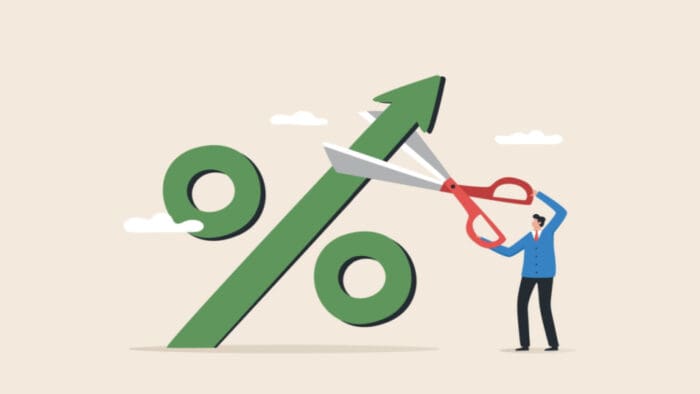

I just mentioned to someone that I wish I got a dollar for every time I’ve heard or seen the phrase “hawkish cut” this week. I’d certainly be able to treat myself to a very nice dinner. (I thought of suggesting a drinking game, but that could be lethal.) In any case, it’s about time to stop speculating about what might happen and instead learn the outcome. Since I suspect that many of you are reading this after the event, I’m going to offer a quick focus on some things to watch in the coming days.
I’ve gotten several questions about the 10-year note yield in recent days. It appears that some investors are becoming concerned that either the current FOMC or one led by Chair Powell’s successor will be even less concerned about the “stable prices” portion of the Fed’s dual mandate. The President has made it quite clear that he desires lower rates, and it seems as though any serious candidate for the Federal Reserve Chair would recognize such a willingness to at least pay lip service to that desire as a prerequisite for consideration. Kevin Hassett, the current director of the National Economic Council, is widely expected to be the nominee and he has done little to dissuade us from that notion.
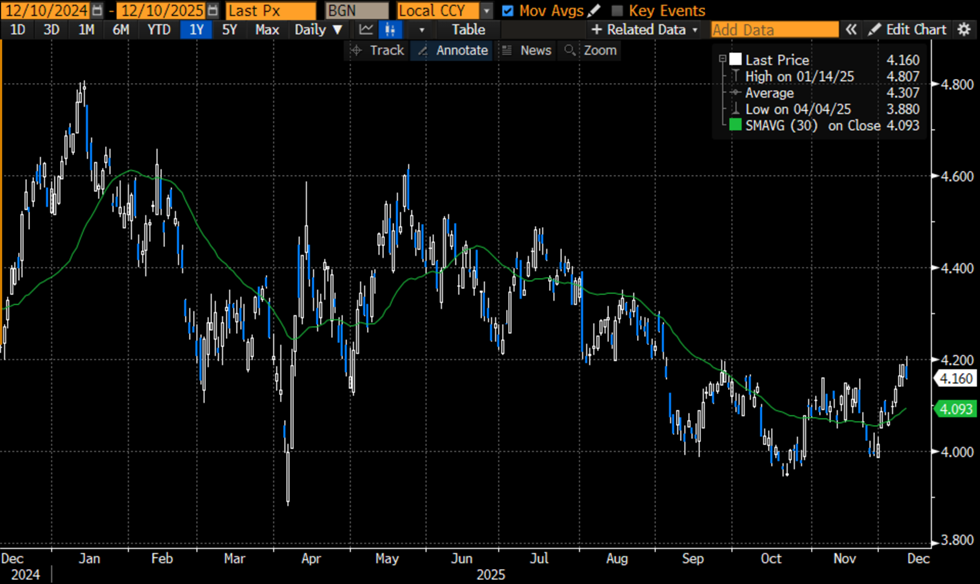
To be fair, however, the Fed has not shown much concern for the fact that inflation has been running above the Fed’s 2% target for several years. That hasn’t offered much negative impact on bond yields – and certainly not on stock prices – over that period. But it appears that the “bond vigilantes” might be limbering up right now. We have seen 10-year yields tick up in recent sessions, causing them to test a 4.20% resistance level and widen their spread against 2-year yields. This morning’s test of the 4.20% level was successful, with the 10-year rate slipping back to 4.16% after rising in the morning.
10-Year Treasury Yields, 1-Year Candles with 30-Day Moving Average (green)
Source: Bloomberg, Past performance is not indicative of future returns.
It’s not as though we haven’t seen higher yields recently; 4.20% would have been a desirable goal earlier this year. They could rise another 20-basis points without much ill effect on stocks. But the direction makes a difference. Yields jumped during the post-election enthusiasm, plunged and bounced during the tariff chaos in April, and then resumed their downward trajectory for most of the ensuing months. A reversal of that trend could change stock market psychology, but only after we have convincingly broken what is now a three-month trading range.
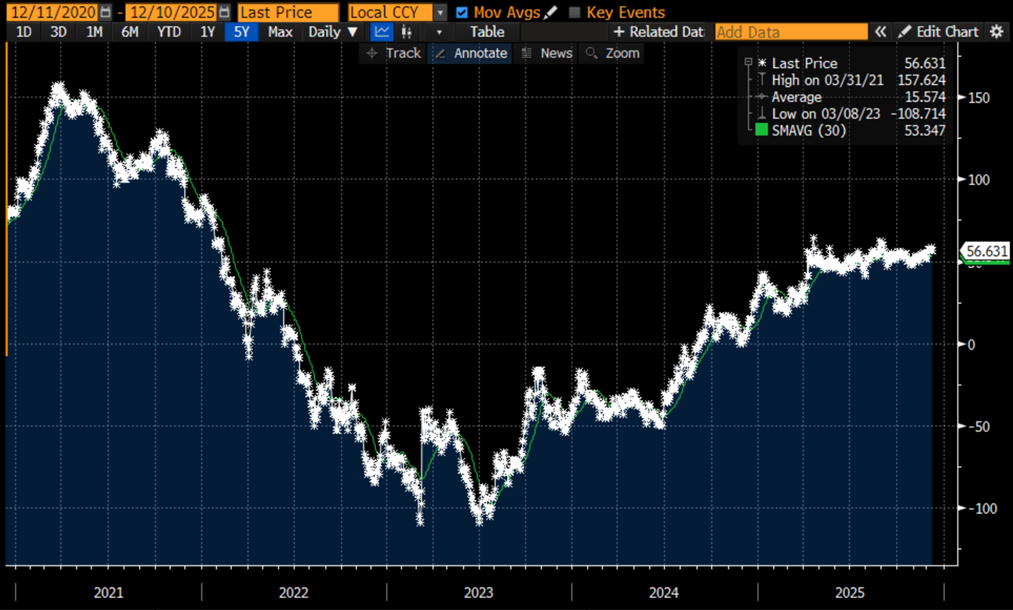
Something similar applies to the 2-10 spread. Since rising earlier this year, we have been in a 40-60 bp trading range since April. Again, it would take a convincing break of that trading range to take us back to the steepness that prevailed in late 2021. The spread tightened throughout 2022, a period during which stocks dropped, but that was because the Fed was busy raising short-term rates. That pushed up 2-year yields while longer rates remained relatively stable because those moves were perceived as stabilizing inflation rather than raising it. A move to a steeper yield curve in the current environment would reflect greater inflation fears.
2-10 Yield Spread, 5-Years (white dots), 30-Day Moving Average (green line)
Source: Bloomberg. Past performance is not indicative of future returns.
Despite the importance of today’s FOMC meeting, it is not likely that we will see this issue fully resolved this afternoon. It will rely more on the future leadership of the Fed and its reaction to the data that we will belatedly learn in the coming weeks. We can concern ourselves with the short-term movements stemming from the FOMC meeting and press conference this afternoon and focus on this in the weeks to come.
New to Interactive Brokers?
Open AccountAlready an Interactive Brokers Client?
Request Trading PermissionDisclosure: Interactive Brokers
The analysis in this material is provided for information only and is not and should not be construed as an offer to sell or the solicitation of an offer to buy any security. To the extent that this material discusses general market activity, industry or sector trends or other broad-based economic or political conditions, it should not be construed as research or investment advice. To the extent that it includes references to specific securities, commodities, currencies, or other instruments, those references do not constitute a recommendation by IBKR to buy, sell or hold such investments. This material does not and is not intended to take into account the particular financial conditions, investment objectives or requirements of individual customers. Before acting on this material, you should consider whether it is suitable for your particular circumstances and, as necessary, seek professional advice.
The views and opinions expressed herein are those of the author and do not necessarily reflect the views of Interactive Brokers, its affiliates, or its employees.
Disclosure: Futures Trading
Futures are not suitable for all investors. The amount you may lose may be greater than your initial investment. Before trading futures, please read the CFTC Risk Disclosure. A copy and additional information are available at the Warnings and Disclosures section of your local Interactive Brokers website.
Disclosure: Options Trading
Options involve risk and are not suitable for all investors. For information on the uses and risks of options read the "Characteristics and Risks of Standardized Options" also known as the options disclosure document (ODD). Multiple leg strategies, including spreads, will incur multiple transaction costs.





Join The Conversation
If you have a general question, it may already be covered in our FAQs page. go to: IBKR Ireland FAQs or IBKR U.K. FAQs. If you have an account-specific question or concern, please reach out to Client Services: IBKR Ireland or IBKR U.K..
Visit IBKR U.K. Open an IBKR U.K. Account