










Key takeaways
- Despite higher oil prices, rising bond yields, and tighter monetary policy, stocks remained near record highs as nominal growth and corporate earnings stayed firm.
- Credit spreads remain contained, economic activity has expanded, and healthy consumer and corporate balance sheets may limit the impact of further rate hikes.
- The economy has been less energy intensive, gas has consumed a smaller share of household income, and supply disruptions may prove temporary.
It has been just over a month since the S&P 500 Index reached a new all-time high on August 13.1 Since then, investors have had to contend with what appears to be a daunting list of developments. Oil prices have surged by more than $20 per barrel.2 The 2-year US Treasury yield has climbed roughly 60 basis points.3 The 10-year Treasury yield has risen by about 40 basis points.4 The Federal Reserve (Fed) has raised interest rates. The Bank of Japan has tightened policy. The Saudi East-West Pipeline was bombed, raising concerns about global energy supply.
And through all of that, the S&P 500 Index sits just 2.07% below its record high.5
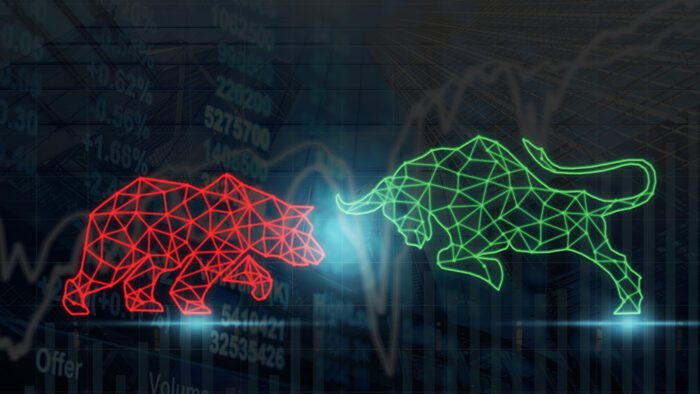
That must be frustrating for the bears.
Perhaps they’ve been focusing too much on the long list of worries and not enough on the backdrop against which they’re unfolding. Markets don’t operate in a vacuum. They’re discounting mechanisms, weighing risks against economic and corporate fundamentals. Right now, those fundamentals have continued to look considerably better than many expected. Strong nominal growth6 and another round of outsized corporate earnings7 have helped offset a growing wall of worry.
Let’s take a closer look at two of the market’s biggest concerns.
Concern: Fed interest rate moves
Coming into the year, most investors expected lower interest rates. At one point, markets had been pricing in as many as three Fed rate cuts.8 The 2-year Treasury yield fell as low as 3.38% at the end of February, just before the conflict with Iran began. Today, that same yield stands near 4.73%.9
That’s a substantial reprice. In many respects, financial markets have already done much of the Fed’s tightening for it, in my view.
What’s notable is what hasn’t happened. Credit spreads have remained well behaved.10 US stock markets have largely absorbed the move.11 Economic activity continued to expand.12 If higher rates were creating meaningful stress across the economy, we’d expect to see those pressures emerging in broader financial conditions.
The reality is that this isn’t a particularly overleveraged economy. Consumers entered this period with relatively healthy balance sheets.13 Corporations largely termed out debt at lower rates.14 If rates rise but relatively few borrowers feel significant pain, then growth is unlikely to slow dramatically. That raises an important question. If markets have already absorbed a 135-basis-point rise in the 2-year Treasury yield from its February low, how much incremental damage will come if the Fed raises rates two more or three times? To me, it’s entirely possible that much of that concern has already been priced in.
Concern: Oil prices
The increase in energy prices is undoubtedly an inconvenient truth. Higher gasoline prices can act like a tax on consumers and weigh on confidence. But context matters.
The global economy has been far less energy intensive than it was decades ago.15 Coming into this year, US consumers had been spending a smaller share of disposable income on gasoline than at virtually any point in modern history.16 That doesn’t mean sustained high energy prices would be harmless. If today’s levels persist long enough, growth could eventually slow. But sustain is the operative word.
Much of the market’s fear has been tied to potential supply disruptions stemming from the conflict with Iran. Roughly 15 million barrels per day had been moving through the Strait of Hormuz.17 Alternative routes, including the Saudi East-West Pipeline, helped offset some of that risk. The bombing of that pipeline has clearly been a setback, but estimates suggest repairs could take days or weeks rather than months or years.
Meanwhile, the economic data continued to tell a resilient story. Retail sales have been holding up.18 Manufacturing activity remained firm.19 Earnings growth remained strong.20
In other words, many of the market’s worst fears at the outset of the conflict have materialized. Energy prices rose.21 Supply infrastructure was damaged. Central banks tightened policy. Bond yields moved sharply higher.22
And yet, the S&P 500 remains just 2.07% below its all-time high.23
To me, that feels less like a fragile market and more like one that has continued to climb a wall of worry. History has suggested that bull markets have rarely advanced in the absence of concern. They have advanced when fundamentals prove stronger than those concerns. To me, that appears to be exactly what’s happening.
What to watch this week
| Date | Region | Event | Why it matters |
|---|---|---|---|
| Sept. 21 | UK | Consumer sentiment (Sept.) | Household confidence and the outlook for spending |
| Sept. 22 | US | Richmond Fed manufacturing survey (Sept.) | Regional factory activity, orders, and price pressures |
| Sept. 23 | US | S&P Global flash manufacturing Purchasing Managers’ Indexes services (Sept.) | Early read on business activity, demand, employment, and prices |
| Eurozone | S&P Global flash manufacturing Purchasing Managers’ Indexes services (Sept.) | Growth momentum and inflation pressures across the currency bloc | |
| UK | S&P Global flash manufacturing Purchasing Managers’ Indexes services (Sept.) | Business conditions after the Bank of England policy decision | |
| Sept. 24 | US | Initial jobless claims New home sales (Aug.) | Labor market conditions and demand in the rate-sensitive housing market |
| Sept. 25 | US | Durable goods orders (Aug.) University of Michigan consumer sentiment, final (Sept.) | Business investment, big-ticket demand, and household inflation expectations |
—
Originally Posted September 21, 2026 – Why the bull market has kept defying the bears
Footnotes
- Source: Bloomberg L.P., Sept. 17, 2026, based on the S&P 500 Index.
- Source: Bloomberg L.P., Sept. 17, 2026, based on US West Texas Intermediate crude oil.
- Source: Bloomberg L.P., Sept. 17, 2026, based on the 2-year US Treasury rate.
- Source: Bloomberg L.P., Sept. 17, 2026, based on the 10-year US Treasury rate.
- Source: Bloomberg L.P., Sept. 17, 2026, based on the S&P 500 Index.
- Source: US Bureau of Economic Analysis, June 30, 2026
- Source: Bloomberg L.P., Sept. 17, 2026, based on the operating earnings of the companies of the S&P 500 Index.
- Source: Bloomberg L.P., Sept. 17, 2026, based on fed funds implied rates.
- Source: Bloomberg L.P., Sept. 17, 2026, based on the 2-year US Treasury rate.
- Source: Bloomberg L.P., Sept. 17, 2026, based on the option-adjusted spread of the Bloomberg US Corporate Bond Index.
- Source: Bloomberg L.P., Sept. 17, 2026, based on the S&P 500 Index.
- Source: The Conference Board, Aug. 31, 2026, based on the US Leading Economic Index.
- Source: US Federal Reserve, Aug. 2026, based on household liabilities relative to household net worth.
- Source: US Federal Reserve, Aug. 2026, based on the net interest payments of nonfinancial US corporations.
- Source: US Energy Information Administration, 2025
- Source: US Energy Information Administration, 2025
- Source: US Energy Information Administration, Aug. 2026
- Source: US Census Bureau, Aug. 2026, based on adjusted retail and food services sales.
- Source: Institute for Supply Management, Aug. 2026, based on the ISM Manufacturing Purchasing Managers Index.
- Source: Bloomberg L.P., Sept. 17, 2026, based on the operating earnings of the companies of the S&P 500 Index.
- Source: Bloomberg L.P., Sept. 17, 2026, based on US West Texas Intermediate crude oil.
- Source: Bloomberg L.P., Sept. 17, 2026, based on the 10-year US Treasury rate.
- Source: Bloomberg L.P., Sept. 17, 2026, based on the S&P 500 Index.
Important information
NA5936015
Image: Mikhail Leonov / Getty
All investing involves risk, including the risk of loss.
Past performance does not guarantee future results.
Investments cannot be made directly in an index.
This does not constitute a recommendation of any investment strategy or product for a particular investor. Investors should consult a financial professional before making any investment decisions.
A basis point is one-hundredth of a percentage point.
A bear market is an environment in which stock prices are falling and widespread pessimism causes the stock market’s downward spiral to be self-sustaining.
The Bloomberg US Corporate Bond Index measures the investment grade, fixed-rate, taxable corporate bond market. It includes US dollar-denominated securities publicly issued by US and non-US industrial, utility, and financial issuers.
The Bloomberg US Corporate Bond Index measures the investment grade, fixed-rate, taxable corporate bond market. It includes US dollar-denominated securities publicly issued by US and non-US industrial, utility, and financial issuers.
A bull market is an environment in which stock prices are rising or are expected to rise.
The Composite Index of Leading Economic Indicators, published by the Conference Board, tracks 10 different components that help assess and predict the economic outlook.
Credit risk is the risk of default on a debt that may arise from a borrower or issuer of bonds failing to make required payments.
Credit spread is the difference in yield between bonds of similar maturity but with different credit quality.
Earnings per share (EPS) refers to a company’s total earnings divided by the number of outstanding shares.
The federal funds implied rate is the difference between the spot rate and the futures rate, which is an interest rate that can be calculated for any security with a futures contract.
Fixed income investments are subject to credit risk of the issuer and the effects of changing interest rates. Interest rate risk refers to the risk that bond prices generally fall as interest rates rise and vice versa. An issuer may be unable to meet interest and/or principal payments, thereby causing its instruments to decrease in value and lowering the issuer’s credit rating.
In general, stock values fluctuate, sometimes widely, in response to activities specific to the company as well as general market, economic, and political conditions.
Leverage measures a company’s total debt relative to the company’s book value.
A market cycle is a trend or pattern that may exist in a given market environment, allowing some securities or asset classes to outperform others.
Option-adjusted spread (OAS) is the yield spread that must be added to a benchmark yield curve to discount a security’s payments to match its market price, using a dynamic pricing model that accounts for embedded options.
Purchasing Managers’ Indexes (PMI) are based on monthly surveys of companies worldwide and gauge business conditions within the manufacturing and services sectors.
The S&P 500® Index is an unmanaged index considered representative of the US stock market.
Tightening monetary policy includes actions by a central bank to curb inflation.
Treasury Inflation-Protected Securities (TIPS) are US Treasury securities that are indexed to inflation.
West Texas Intermediate (WTI) is a type of light, sweet crude oil that comes from the US.
The opinions referenced above are those of the author as of Sept. 18, 2026. These comments should not be construed as recommendations, but as an illustration of broader themes. Forward-looking statements are not guarantees of future results. They involve risks, uncertainties, and assumptions; there can be no assurance that actual results will not differ materially from expectations.
Disclosure: Invesco US
This does not constitute a recommendation of any investment strategy or product for a particular investor. Investors should consult a financial advisor/financial consultant before making any investment decisions. Invesco does not provide tax advice. The tax information contained herein is general and is not exhaustive by nature. Federal and state tax laws are complex and constantly changing. Investors should always consult their own legal or tax professional for information concerning their individual situation. The opinions expressed are those of the authors, are based on current market conditions and are subject to change without notice. These opinions may differ from those of other Invesco investment professionals.
NOT FDIC INSURED
MAY LOSE VALUE
NO BANK GUARANTEE
All data provided by Invesco unless otherwise noted.
Invesco Distributors, Inc. is the US distributor for Invesco Ltd.’s Retail Products and Collective Trust Funds. Institutional Separate Accounts and Separately Managed Accounts are offered by affiliated investment advisers, which provide investment advisory services and do not sell securities. These firms, like Invesco Distributors, Inc., are indirect, wholly owned subsidiaries of Invesco Ltd.
©2024 Invesco Ltd. All rights reserved.
Disclosure: Interactive Brokers Third Party
Information posted on IBKR Campus that is provided by third-parties does NOT constitute a recommendation that you should contract for the services of that third party. Third-party participants who contribute to IBKR Campus are independent of Interactive Brokers and Interactive Brokers does not make any representations or warranties concerning the services offered, their past or future performance, or the accuracy of the information provided by the third party. Past performance is no guarantee of future results.
This material is from Invesco US and is being posted with its permission. The views expressed in this material are solely those of the author and/or Invesco US and Interactive Brokers is not endorsing or recommending any investment or trading discussed in the material. This material is not and should not be construed as an offer to buy or sell any security. It should not be construed as research or investment advice or a recommendation to buy, sell or hold any security or commodity. This material does not and is not intended to take into account the particular financial conditions, investment objectives or requirements of individual customers. Before acting on this material, you should consider whether it is suitable for your particular circumstances and, as necessary, seek professional advice.





Join The Conversation
If you have a general question, it may already be covered in our FAQs page. go to: IBKR Ireland FAQs or IBKR U.K. FAQs. If you have an account-specific question or concern, please reach out to Client Services: IBKR Ireland or IBKR U.K..
Visit IBKR U.K. Open an IBKR U.K. Account