











Originally Posted September 23 2025 – How AI disruption is reshaping the software sector landscape
Author: Jonathan Cofsky, CFA
Concerns over AI disruption have sparked debate about the future of software companies. Portfolio Manager and Research Analyst Jonathan Cofsky and Research Analyst Joe Goodwin explain why the situation is far more nuanced than the prevailing doom-and-gloom narratives suggest.
Key takeaways:
- AI disruption fears have moved to the forefront of investor worries about software company business models and competitive positioning.
- Primary threats include seat-based pricing erosion, agentic AI systems, and new AI-native competitors. However, established companies retain advantages in proprietary data, customer relationships, and mission-critical system complexity.
- We believe taking a selective approach across software segments make sense, favoring data infrastructure and vertical solutions while remaining cautious about horizontal applications facing direct AI competition.

The software sector has faced headwinds in recent months as AI disruption concerns have grown. Valuations have compressed across the sector, reflecting investor uncertainty about how AI might reshape established software businesses.
But we believe the current market reaction tells only part of the story. While AI presents real challenges for software companies, there are also meaningful defensive advantages that warrant consideration.
Software sector faces challenges…
AI disruption concerns have been building and have evolved over two years as investors evaluate fundamental questions about software business models.
The first issue centers on seat-based pricing. Many software companies charge based on user count. If AI makes employees more efficient, companies may need fewer software licenses. This threatens the revenue foundation for established vendors, particularly application software companies.
More recently, “agentic AI” has emerged as a consideration. These systems handle complex workflows independently, potentially reducing current platforms to simple data repositories. For example, a company might still need its customer management system, but AI agents operating on top of the platform could capture the real value by pulling information from multiple sources.
New AI-native competitors represent another development. Major language model providers are expanding into business applications, building on modern technology stacks. When news broke recently that a leading AI company was developing hiring solutions, shares of established players dropped 2% to 3% in a single day. While we think fears of wholesale replacement are overblown, the market reaction demonstrates investor sensitivity to AI competition.
Machine coding capabilities have also drawn attention. Microsoft’s CEO reported that AI currently writes 20% to 30% of their code, with the company’s Chief Technology Officer projecting it would reach 95% by 2030. This development raises questions about whether enterprises might shift from “buy-first” to “build-first” approaches as AI makes software creation more accessible.
Additionally, established companies have shown limited direct AI revenue so far. One major company reported $100 million in AI-related recurring revenue, which is a fraction of its $40 billion revenue base. The lack of meaningful AI monetization has led to questions about whether incumbents can adapt quickly enough.
…but has built-in defenses
Despite these developments, we believe established software companies remain fundamentally well positioned and maintain several competitive advantages.
First, incumbents control proprietary data, customer relationships, and distribution channels. They already sit at the center of their customers’ workflows and have collected information over years that enables effective AI applications. This gives them a head start over new entrants trying to build AI solutions from scratch.
Second, production-grade AI remains limited in scope. Beyond code generation and customer service automation, many AI projects have not scaled into broad production use. Companies leading AI development have acknowledged that agent-based solutions are not ready for widespread deployment. This timeline allows incumbents to integrate AI features, adjust pricing models, and deliver value without surrendering their core franchises.
Core business systems – the software that manages customer relationships, enterprise resources, and human capital – are also very difficult to replace. Enterprises prioritize security, governance, and accountability when systems fail. These practical issues slow enterprise adoption of unproven AI alternatives in favor of established providers.
A selective approach
We think AI’s impact will vary across the software landscape, and as such, we are focusing our attention on areas where we see durable advantages and less immediate risk.
Areas of opportunity
Data infrastructure companies appear well positioned. Enterprises need clean, centralized data before AI can deliver reliable outcomes, whether they build internal solutions or use third-party services. Companies that help organize and manage information, plus those providing monitoring and observability services, may benefit. Their consumption-based pricing models align with AI-driven increases in data and compute usage.
Vertical software serving specific industries presents another area of interest. Companies addressing specialized industry needs – such as insurance claims processing or home service scheduling – possess domain expertise and workflows that generic AI solutions cannot easily replicate. These companies also maintain unique datasets and high switching costs that provide competitive defenses.
Design software for semiconductor development represents a specialized opportunity. These companies fulfill advanced chip design requirements and are positioned to benefit from AI advancement along with R&D spending in the semiconductor sector.
Areas requiring caution
Horizontal application software serving broad functions across industries may face more direct AI competition. For example, customer support platforms and creative software operate in large, standardized markets where new AI startups can compete more effectively.
Broadly speaking, point solutions focused on specific functions like email marketing or expense tracking may experience more competitive pressure than integrated platforms, given reduced barriers for new market entrants.
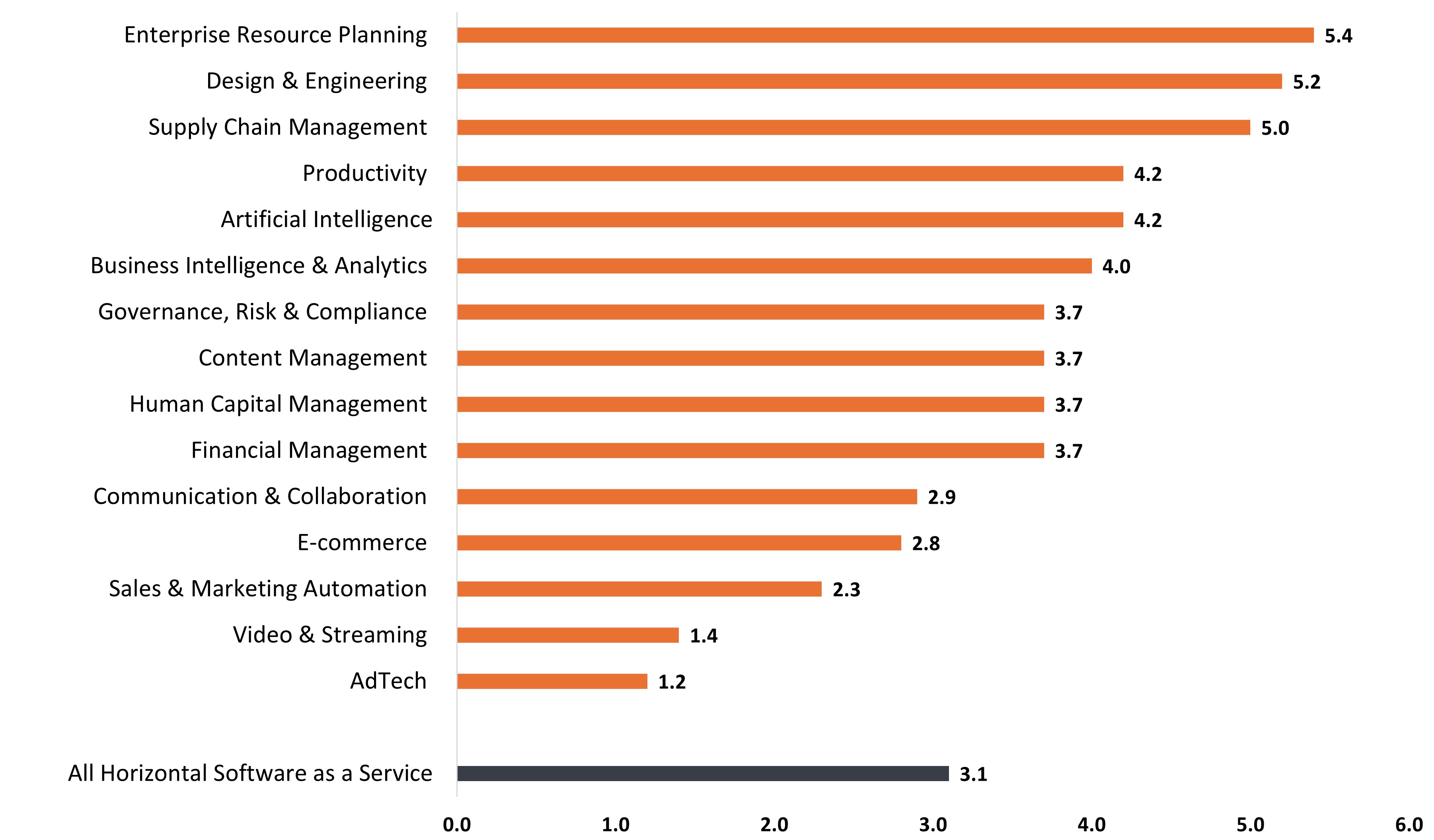
Figure 1: Median EV / NTM Revenue Multiples
The valuation differences among horizontal application software companies help illustrate investor views on the varying potential for AI disruption across segments.
Source: Multiples. Report: Software Valuation Multiples – September 2025. EV/NTM Revenue = Enterprise Value to Net Twelve Months Revenue.
What we’re monitoring
The AI transition and its impact on the software sector requires careful fundamental analysis. Key metrics we’re monitoring include direct AI revenue growth at established companies, adoption rates for new AI-powered products, and whether AI revenue supplements or replaces existing business lines.
We are also tracking how companies use AI internally to improve operations and margins, as well as product development velocity. Companies that leverage AI to accelerate their own development may expand into new markets more quickly, potentially offsetting competitive pressures in core businesses.
The outlook
The software sector faces a period of transition, but outcomes remain uncertain. While some disruption is inevitable, the wholesale replacement of established companies remains far from certain.
Like any major platform shift, there will be winners and losers. The next 18 months should provide clarity as software companies move from AI promises and development to actual product delivery and revenue generation.
We believe current valuations in many software segments appear reasonable relative to historical levels, but fundamental analysis and careful selection has become more important. In our view, the companies best positioned for this transition are those that can maintain defensible market positions, specialized expertise, or infrastructure that benefits from AI adoption rather than competing against it.
Disclosure: Janus Henderson
The opinions and views expressed are as of the date published and are subject to change without notice. They are for information purposes only and should not be used or construed as an offer to sell, a solicitation of an offer to buy, or a recommendation to buy, sell or hold any security, investment strategy or market sector. No forecasts can be guaranteed. Opinions and examples are meant as an illustration of broader themes and are not an indication of trading intent. It is not intended to indicate or imply that any illustration/example mentioned is now or was ever held in any portfolio. Janus Henderson Group plc through its subsidiaries may manage investment products with a financial interest in securities mentioned herein and any comments should not be construed as a reflection on the past or future profitability. There is no guarantee that the information supplied is accurate, complete, or timely, nor are there any warranties with regards to the results obtained from its use. Past performance is no guarantee of future results. Investing involves risk, including the possible loss of principal and fluctuation of value.
Disclosure: Interactive Brokers Third Party
Information posted on IBKR Campus that is provided by third-parties does NOT constitute a recommendation that you should contract for the services of that third party. Third-party participants who contribute to IBKR Campus are independent of Interactive Brokers and Interactive Brokers does not make any representations or warranties concerning the services offered, their past or future performance, or the accuracy of the information provided by the third party. Past performance is no guarantee of future results.
This material is from Janus Henderson and is being posted with its permission. The views expressed in this material are solely those of the author and/or Janus Henderson and Interactive Brokers is not endorsing or recommending any investment or trading discussed in the material. This material is not and should not be construed as an offer to buy or sell any security. It should not be construed as research or investment advice or a recommendation to buy, sell or hold any security or commodity. This material does not and is not intended to take into account the particular financial conditions, investment objectives or requirements of individual customers. Before acting on this material, you should consider whether it is suitable for your particular circumstances and, as necessary, seek professional advice.






Join The Conversation
If you have a general question, it may already be covered in our FAQs page. go to: IBKR Ireland FAQs or IBKR U.K. FAQs. If you have an account-specific question or concern, please reach out to Client Services: IBKR Ireland or IBKR U.K..
Visit IBKR U.K. Open an IBKR U.K. Account