
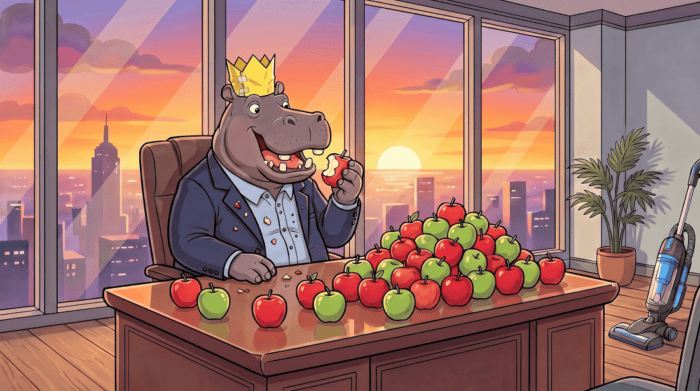


Apple is back vying for the top spot. At a $4.9 trillion market cap, it briefly overtook Nvidia as the world’s most valuable company on Friday as the AI boom lost some of its steam. Nvidia later regained the lead, and the two companies are now racing neck-and-neck for the crown.
The twist is that Apple has spent much of the past decade being accused of moving sluggishly: cautious on launching genuinely new products, slow on revamping Siri, and largely ignoring generative AI. In the tech space, it sticks out like the antithesis of the AI darling Nvidia.
Despite this, Apple shares have skyrocketed nearly 2,500% since outgoing CEO Tim Cook started at the job in 2011. This is usually attributed to Cook’s operational discipline.
But Cook’s Apple has another superpower: cash. In 2012, less than a year after he took the helm, Apple announced its first share repurchase plan and reintroduced dividends after a 17-year hiatus. Since then, the buyback program has grown into a leviathan. By the end of the first quarter of the 2026 fiscal year, Apple had bought $840 billion of its own shares, according to company filings. This compares with $181 billion of dividend payouts during the same period. The Apple board has approved another $100 billion for future repurchases. Other companies, including Nvidia, are also doing major buyback programs, but Apple is in a league of its own.
It plans relatively modest $14 billion of capital expenditures this year. Meanwhile, AI-heavy giants Microsoft, Alphabet, Amazon, and Meta expect to splurge together more than $700 billion into data centers, servers, and advanced AI chips this year. It remains to be seen whether new CEO John Ternus will continue Cook’s shareholder-focused approach when he starts in September or find new uses for Apple’s vast cash pile.
Introducing IBKR InvestMentor Snapshots
This story is an example of why we have launched InvestMentor Snapshots. Snapshots are 1-2 minute lessons, explaining key concepts of finance and economics that are in the news right now. They all come with our new “animal spirits” visual theme, making learning memorable. You can find the (quickly expanding) library on our website or by downloading the free IBKR InvestMentor app to access interactive quizzes at the end of each Snapshot.
Here’s a little taster:
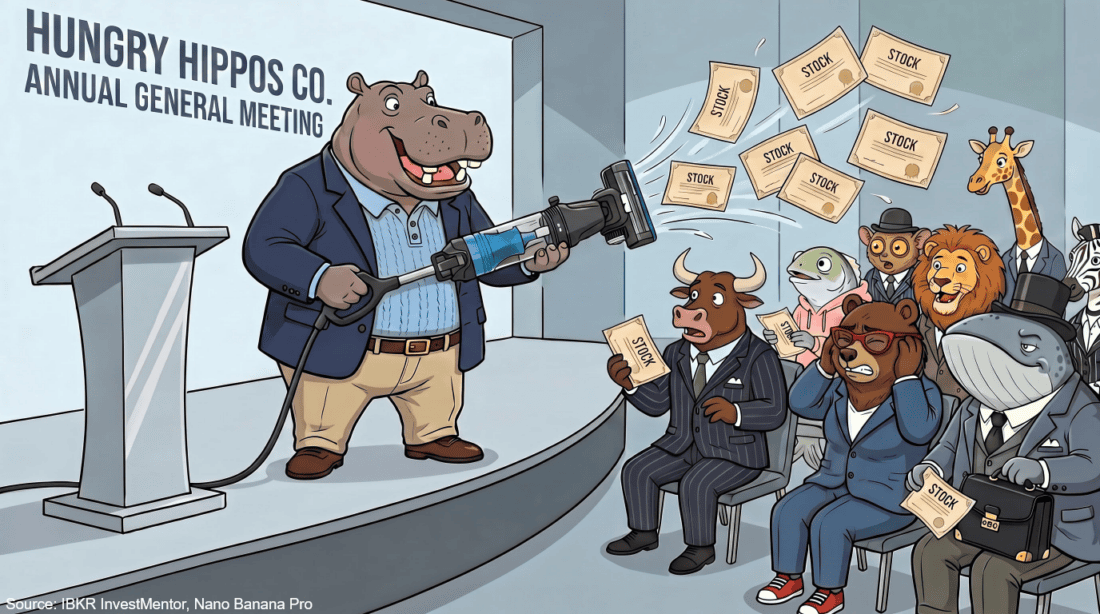
What Are Share Buybacks?
In a share buyback, a company repurchases its own shares from the stock market. Fewer shares left in circulation means each remaining share represents a bigger slice of the company.
Unlike dividends, the buyback payout is indirect: investors benefit through higher earnings per share (EPS) and, potentially, a higher stock price, rather than a cash payment arriving in their account.
US tech giant Apple has been a record spender on buybacks, pouring more than $800 billion on them between 2013 and 2025.

Why Should I Care?
Share buybacks have gradually increased in popularity among companies as a convenient way to create value for shareholders. Global buybacks hit a record of $1.5 trillion in 2025, exceeding dividends in value in some markets, such as the US.
Firms like them because:
- No commitment to regular cash payments
- They can boost per‑share metrics like EPS without having to grow the business
- In some countries, gains may be taxed later than dividends
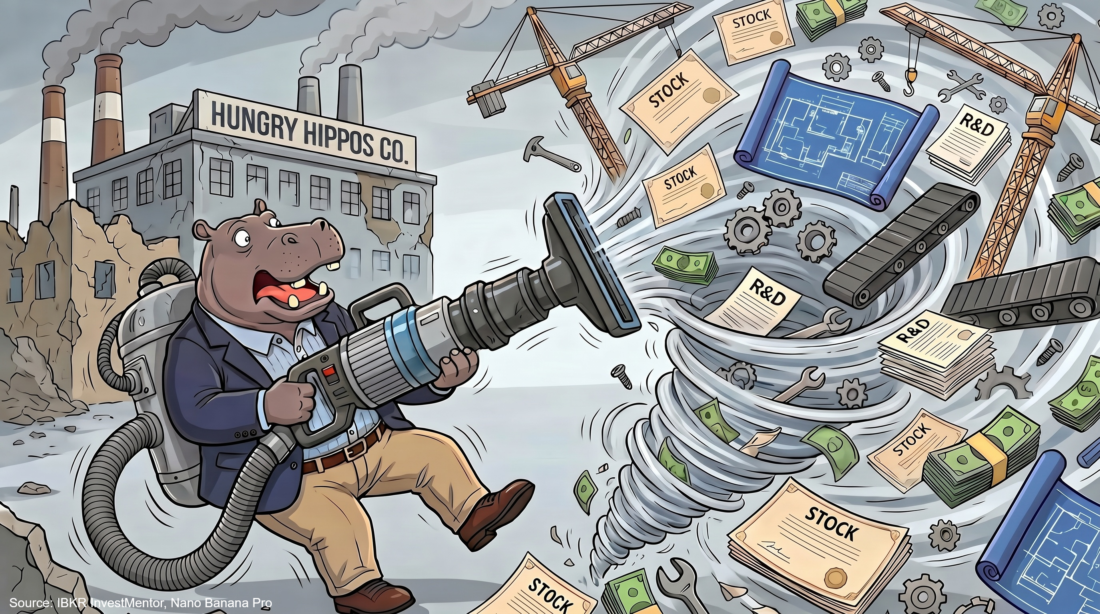
What’s the Catch?
Companies can overspend on buybacks, neglecting growth investments. And if they borrow to fund repurchases, it adds risk. A buyback can signal confidence, or it can signal a lack of better ideas.
Whether you like them or not depends on your goals:
- Income‑focused investors (often retirees) prefer dividends for predictable cash flow
- Growth‑oriented investors may favor buybacks for price gains and tax flexibility.
Download IBKR InvestMentor today for free courses, Snapshots, and news explainers.


Learn more about InvestMentor
Disclosure: Interactive Brokers Affiliate
Information posted on IBKR Campus that is provided by third-parties does NOT constitute a recommendation that you should contract for the services of that third party. Third-party participants who contribute to IBKR Campus are independent of Interactive Brokers and Interactive Brokers does not make any representations or warranties concerning the services offered, their past or future performance, or the accuracy of the information provided by the third party. Past performance is no guarantee of future results.
This material is from IBKR InvestMentor, an affiliate of Interactive Brokers LLC, and is being posted with its permission. The views expressed in this material are solely those of the author and/or IBKR InvestMentor and Interactive Brokers is not endorsing or recommending any investment or trading discussed in the material. This material is not and should not be construed as an offer to buy or sell any security. It should not be construed as research or investment advice or a recommendation to buy, sell or hold any security or commodity. This material does not and is not intended to take into account the particular financial conditions, investment objectives or requirements of individual customers. Before acting on this material, you should consider whether it is suitable for your particular circumstances and, as necessary, seek professional advice.






Join The Conversation
If you have a general question, it may already be covered in our FAQs page. go to: IBKR Ireland FAQs or IBKR U.K. FAQs. If you have an account-specific question or concern, please reach out to Client Services: IBKR Ireland or IBKR U.K..
Visit IBKR U.K. Open an IBKR U.K. Account