



October’s recap explores the tools and ideas shaping quantitative finance, from Python API integration and trading automation to AI-assisted research and investment strategy analysis. This collection brings together practical guides and research perspectives, emphasizing reliable data, rigorous backtesting, operational safeguards, and human judgment when applying technology to financial markets.
IBKR API and AI Integration
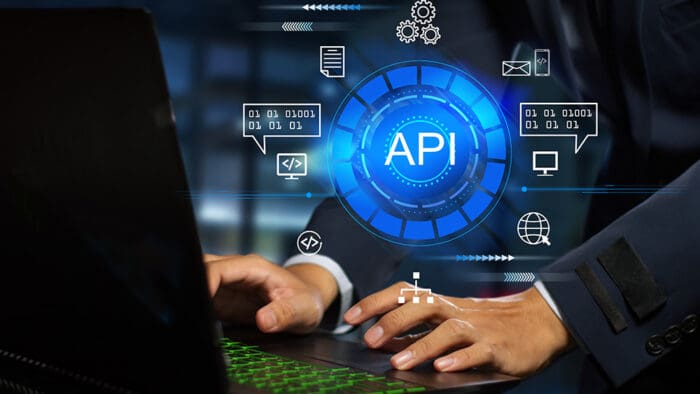
- Automate Trading with Interactive Brokers Python API – Jason, PyQuant News, walks through connecting to IBKR’s platform, accessing market data, managing orders and portfolios, and supporting algorithmic trading and backtesting, with code examples and learning resources.
- How to Set Up Interactive Brokers and ORATS in Claude – Tyler Cheves, ORATS, details how to connect Interactive Brokers and ORATS to Claude for portfolio analysis and options research.
- Trading Futures with IBridgePy: ES, MES, and NQ Complete Guide – IBridgePy breaks down how to automate ES, MES, and NQ futures trading with Python and IBridgePy through Interactive Brokers, covering contract definitions, order placement, and key operational considerations.
- Keeping an IBKR API System Running Unattended – Ankur Parikh, Trade Vectors LLP, discusses that running an IBKR API system reliably unattended requires planned restarts, state verification after reconnects, request pacing, ongoing reconciliation, risk controls, and paper testing before live trading.
- Stop Treating Claude Like Your Trading CEO – Dave Mabe, MabeKit, emphasizes that traders should use AI as a supervised assistant for specific tasks, workflow improvements, and rigorous backtesting – not as an authority for investment decisions or profitable strategies.
- Python API for Interactive Brokers – IBridgePy outlines how IBKR’s native Python API supports automated trading, real-time and historical data access, and custom trading tools – with setup requiring an IB account, the API, and TWS or IB Gateway.
- The Insider’s Guide to Clean Financial Market Data with Python and Yahoo Finance – PyQuant News demonstrates how to build a reliable workflow, covering corporate actions, missing records, timestamp alignment, and caching before analysis or backtesting.
- AI in Quant Jobs: Impact of Automation and Skills Adaptation in the Age of AI – Chainika Thakar, QuantInsti, notes that AI is reshaping quantitative finance by automating research, trading, and risk analysis, while requiring quants to develop new technical skills and retain human judgment to address data integrity, explainability, and regulatory challenges.
- You Want to Backtest a Strategy. Claude Wants to Start a Software Company. – Dave Mabe, MabeKit, advocates using AI with established backtesting platforms to test trading strategies efficiently rather than getting sidetracked building custom tools.
- Neural Networks in Finance: Risk and Fraud Management – Jason, PyQuant News, contends that the technology strengthens both areas through predictive analytics, real-time monitoring, and adaptive pattern recognition, but its effectiveness depends on data quality, interpretability, computational demands, and bias.
Research & Strategy
- Analyzing Financial Trends: Kalman Filtering for Gold vs Bitcoin – Selcuk Disci, DataGeeek, presents an R pipeline, inspired by academic research in sports biomechanics, which combines Kalman filtering, drift removal, normalization, and visualization to compare the two assets and highlight directional divergence.
- Buying Complex Retail Investment Products – Elisabetta Basilico, guest contributor to Alpha Architect, reviews a study by Marc Chesney, Felix Fattinger, Jonathan Krakow, and Simon Straumann that introduces a strategic interpretation of financial complexity, arguing that issuers may deliberately redesign these products as competitive pressure increases, shifting toward structures that are harder for investors to evaluate and compare.
- Leverage Factor-Based Investing Enhance Returns Using Historical Financial Ratios – Jason, PyQuant News, describes how these ratios underpin the approach through stock screening, backtesting, diversification, and risk management, while stressing accurate data, solid infrastructure, and changing market conditions.
- What Really Drives the Asset Growth Anomaly? New Evidence Points to Mispricing, Not Risk – Larry Swedroe, guest contributor to Alpha Architect, examines a study by Zhuo Cheng, Daniel Cohen, and Jing Fang that challenges the standard risk-based explanations for the well-known asset growth anomaly.
Already an Interactive Brokers Client?
New to Interactive Brokers?
Disclosure: Interactive Brokers
The analysis in this material is provided for information only and is not and should not be construed as an offer to sell or the solicitation of an offer to buy any security. To the extent that this material discusses general market activity, industry or sector trends or other broad-based economic or political conditions, it should not be construed as research or investment advice. To the extent that it includes references to specific securities, commodities, currencies, or other instruments, those references do not constitute a recommendation by IBKR to buy, sell or hold such investments. This material does not and is not intended to take into account the particular financial conditions, investment objectives or requirements of individual customers. Before acting on this material, you should consider whether it is suitable for your particular circumstances and, as necessary, seek professional advice.
The views and opinions expressed herein are those of the author and do not necessarily reflect the views of Interactive Brokers, its affiliates, or its employees.
Disclosure: Options (with multiple legs)
Options involve risk and are not suitable for all investors. For information on the uses and risks of options read the "Characteristics and Risks of Standardized Options" also known as the options disclosure document (ODD). Multiple leg strategies, including spreads, will incur multiple transaction costs.
Disclosure: Futures Trading
Futures are not suitable for all investors. The amount you may lose may be greater than your initial investment. Before trading futures, please read the CFTC Risk Disclosure. A copy and additional information are available at the Warnings and Disclosures section of your local Interactive Brokers website.
Join The Conversation
If you have a general question, it may already be covered in our FAQs page. go to: IBKR Ireland FAQs or IBKR U.K. FAQs. If you have an account-specific question or concern, please reach out to Client Services: IBKR Ireland or IBKR U.K..
Visit IBKR U.K. Open an IBKR U.K. Account